
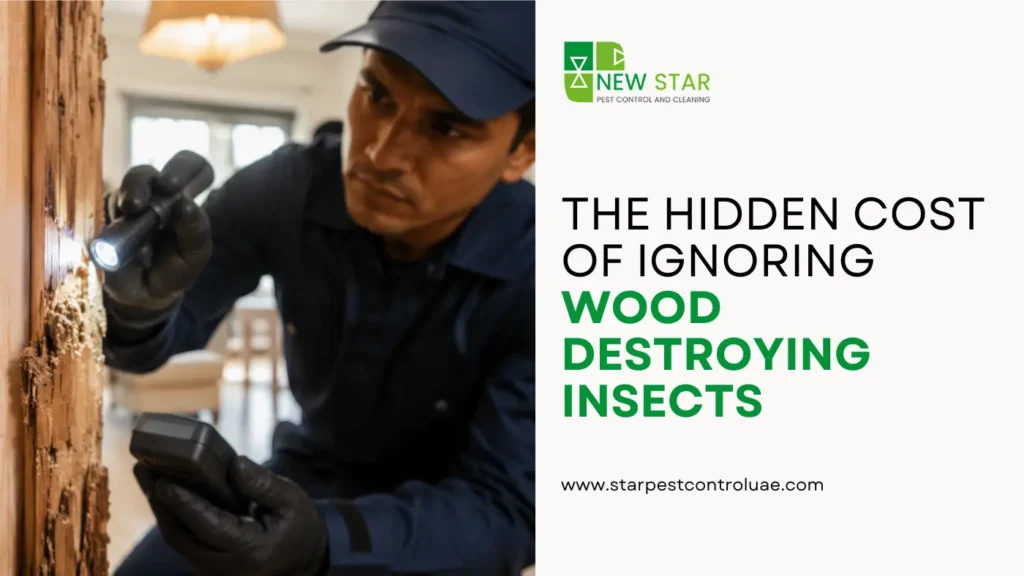
Most homeowners in the UAE worry about the pests they can see. A cockroach scuttling across the kitchen floor. Ants marching along a windowsill. But the real damage often happens where nobody’s looking, behind walls, under flooring, inside furniture frames that seemed perfectly fine last year.
By the time you notice sagging shelves or a hollow-sounding skirting board, wood-destroying insects have usually been at work for months, sometimes years. And unlike a roach infestation, you can clean up in a weekend; structural damage doesn’t reverse itself. It just gets more expensive. Let’s talk about why this quiet threat deserves far more attention than it gets, and what it actually costs you to look the other way.
Why Wood-Destroying Insects Are So Easy to Miss
Termites, wood-boring beetles, and carpenter ants don’t announce themselves. They work from the inside out, hollowing timber while leaving the surface looking untouched.
A few reasons this problem sneaks up on people:
- Damage is often internal first. The wood can look solid while it’s structurally compromised underneath.
- Activity is seasonal and quiet. Termite swarms happen briefly, often after rain, then colonies retreat and keep working unseen.
- Warning signs are subtle. A slightly hollow sound when you knock on a door frame, tiny pinholes in furniture, or fine sawdust-like debris are easy to dismiss as nothing.
By the time visible signs like buckling wood, blistered paint, or discarded wings near windows show up, the infestation is usually well established.
The Real Cost of Delaying Treatment
Here’s where the math gets uncomfortable. Early intervention against wood-destroying insects is almost always the cheapest option on the table. Every month of delay tends to shift the bill from “manageable” to “major renovation.”
- Structural repairs. Replacing termite-damaged beams, door frames, or subflooring costs far more than the insects that caused it.
- Furniture and fittings. Wooden cabinets, wardrobes, and flooring often need full replacement, not just spot repair.
- Property value. A documented infestation history can complicate resale or rental negotiations, especially with informed buyers who ask for inspection reports.
- Recurring treatment costs. Left untreated, colonies expand, meaning future treatment covers a larger area and a longer timeline.
A villa owner in Sharjah once told me he’d noticed a small patch of blistered paint near his balcony door for nearly a year before calling anyone. What should have been a localised treatment turned into replacing an entire door frame and treating three adjoining rooms. The delay cost him roughly four times what early action would have.
Spotting the Early Warning Signs
You don’t need to be a pest expert to catch problems early. A little awareness goes a long way. Keep an eye out for:
- Mud tubes running along foundation walls or pillars (a classic termite highway)
- Wood that sounds papery or hollow when tapped
- Small, neat holes in wooden furniture with fine powder nearby
- Discarded wings are scattered near windowsills or light fixtures after rain
- Doors and windows that suddenly stick are often a sign of warped, damaged wood
If any of this looks familiar, it’s worth getting a professional opinion rather than waiting to see if it gets worse.
Why UAE Homes Are Particularly Vulnerable
The climate here plays a bigger role than people realise. Humidity from AC condensation, irrigation near villas, and warm temperatures year-round create ideal breeding conditions for termites and other wood-destroying insects. Add in the widespread use of timber indoors, flooring, and decorative fittings, and you’ve got no shortage of food sources.
This is exactly why relying on a proper insect control service rather than DIY sprays matters so much in this region. Store-bought treatments might kill visible insects on contact, but they rarely touch the colony feeding inside your walls.
What Professional Treatment Actually Involves
A thorough approach typically includes:
- Inspection. Identifying the species, extent of damage, and entry points.
- Targeted treatment. Using termiticides, baiting systems, or fumigation, depending on severity.
- Preventive barriers. Soil treatment or physical barriers to stop future colonies from moving in.
- Follow-up monitoring. Because a single treatment isn’t always the end of the story, especially with established colonies.
This is where working with a trusted pest control Ajman provider pays off, particularly for older properties where timber has had decades to become an attractive target.
Prevention Beats Cure, Every Time
Once you’ve dealt with an infestation, the goal shifts to keeping it from coming back. A few practical habits make a real difference:
- Fix leaking pipes and AC units promptly, moisture attracts termites
- Keep firewood, timber offcuts, and cardboard away from exterior walls
- Schedule annual inspections, even without visible signs
- Seal cracks in foundations and walls where insects can enter
- Avoid direct wood-to-soil contact in landscaping or fencing
If you’re renovating or building, ask your contractor about termite-resistant materials or pre-construction soil treatment. It’s a small addition to the project cost that can save enormous headaches later.
Regional Considerations Across the UAE
Termite infestations are a concern across the UAE, but the level of risk varies from one emirate to another due to differences in climate, humidity, property age, and surrounding environments. Understanding these regional conditions helps homeowners and businesses choose the right preventive measures before infestations cause significant structural damage.
Properties in the northern emirate often experience increased termite activity because of higher humidity and nearby agricultural areas. Professional pest control in Ras Al Khaimah helps identify infestations early and protect homes and commercial buildings from costly wood damage.
In densely populated residential communities, termites can spread quickly through shared walls and closely built structures. Timely pest control in Sharjah services play a vital role in preventing infestations from affecting neighbouring properties.
Following periods of rainfall and increased moisture, termite activity becomes more noticeable in many parts of the city. Reliable pest control in Dubai services help detect hidden termite colonies before they cause extensive structural damage.
For homeowners and businesses in rapidly growing residential and commercial areas, routine inspections are equally important. Professional pest control in Ajman services provide effective termite prevention and treatment solutions, helping protect properties from long-term wood damage and expensive repairs.
Termite Control: The Specific Threat Within the Category
While the broader category of wood-destroying insects includes beetles and carpenter ants, termites remain the most destructive and the most common culprit in this region. Effective termite control in Dubai typically requires a combination of chemical barriers, monitoring stations, and periodic reinspection, not a single visit and done.
Frequently Asked Questions
How do I know if I have termites versus another wood-damaging pest?
Termites usually leave mud tubes and cause wood to look layered or honeycombed inside. Beetles tend to leave small, round exit holes with fine powder nearby. A professional inspection can confirm which pest you’re dealing with.
Can I treat a termite problem myself?
Surface sprays might reduce visible activity temporarily, but they rarely reach the colony. Professional treatment addresses the source, not just the symptoms.
How often should I get my property inspected?
Annually is a reasonable baseline, though older properties or homes near irrigation and landscaping benefit from more frequent checks.
Does treatment damage my furniture or flooring?
Modern treatments are designed to be minimally invasive. Your provider should walk you through what to expect before starting.
Is this a bigger risk in villas than apartments?
Generally, yes, since villas have more direct wood-to-soil contact and larger timber elements, though apartments with wooden fittings and shared structures aren’t immune.
Ready to Protect Your Property?
Don’t wait for the damage to become visible, and expensive. New Star Pest Control Dubai offers expert termite and wood-destroying insect inspections across Dubai, Sharjah, Ajman, and Ras Al Khaimah. Our team identifies the problem early and treats it at the source, so you can protect your home before a small issue turns into a major renovation.
Call us today to book your inspection, or reach out online for a free consultation. Your property’s foundation deserves nothing less.