
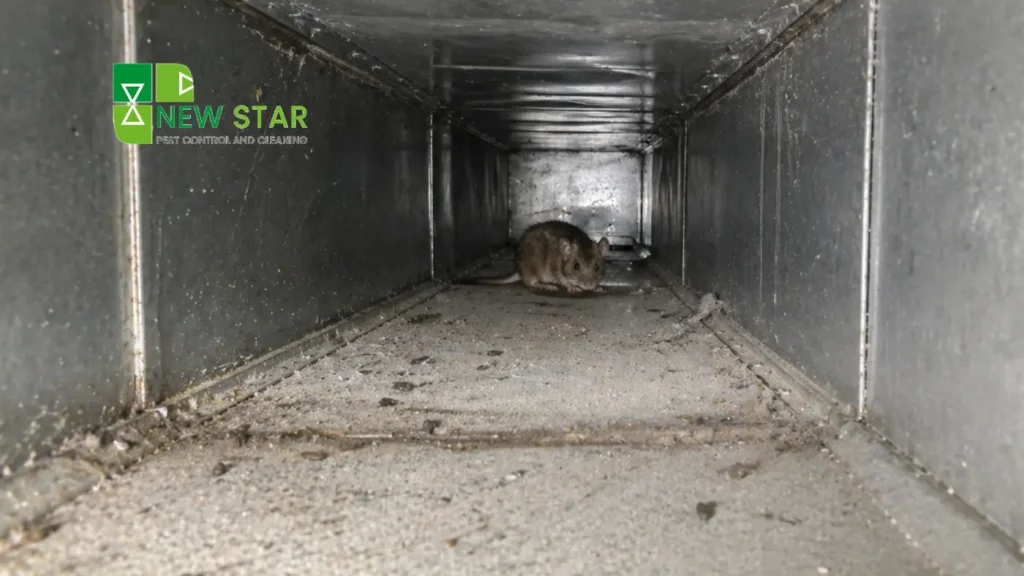
You switch on the AC. Everything seems normal — until you hear it. A faint scratching. A rustle somewhere deep behind the vent. Then the smell hits you, something musty and wrong that no amount of air freshener seems to fix.
If this sounds familiar, you’re not imagining things. Mice in HVAC ducts are a far more common problem in Dubai than most homeowners and facility managers want to admit. The city’s extreme heat pushes rodents to seek cool, dark, enclosed spaces — and your ducting system is exactly that. It’s warm in winter, cool in summer, hidden from predators, and often connects directly to your kitchen or storage areas. For a mouse, it’s the perfect home.
The good news? This is a solvable problem. But it requires more than setting a few traps and hoping for the best.
Why Dubai’s Climate Makes HVAC Systems a Rodent Hotspot
Dubai’s year-round heat is legendary. Temperatures that regularly exceed 45°C in summer force both people and pests indoors. While humans reach for the thermostat, rodents follow the same instinct — they look for cooler, sheltered environments to survive.
HVAC ducting in residential buildings and commercial spaces provides exactly what they need: insulation, darkness, access to multiple rooms, and proximity to food sources. Older buildings with deteriorating duct seals, and newer ones with construction gaps that were never properly closed, are especially vulnerable.
There’s also the issue of food waste. Dubai’s dense urban landscape—apartment towers, shared building corridors, restaurant-heavy commercial districts—creates a buffet environment for rodents. Once they’ve found a food source, they don’t go far. They nest close by. And your ductwork is close to everything.
Telltale Signs You Have Mice in Your HVAC Ducts
Before you can fix the problem, you need to confirm it. Here’s what to look for:
- Scratching or scurrying sounds coming from vents or behind walls, especially at night
- A persistent musty or ammonia-like odour from your air vents
- Droppings near vent covers or on surfaces close to duct openings
- Chewed duct insulation or wiring was discovered during maintenance
- Greasy smear marks along duct edges from the oils in the mouse fur
- Allergic reactions or respiratory irritation among building occupants—mouse dander and droppings circulated through AC systems are a serious health hazard
If you’re noticing two or more of these signs, don’t delay. The longer a colony is allowed to establish itself, the harder—and more expensive—the removal becomes.
The Real Dangers of Ignoring This Problem
This isn’t just about discomfort. Mice living inside HVAC ductwork pose genuine health and safety risks that go beyond the obvious.
Health risks include hantavirus, salmonella, and leptospirosis—all of which can be transmitted through mouse droppings or urine circulated by your air conditioning system directly into the spaces where people breathe, sleep, and work.
Fire hazards are also a serious concern. Mice chew constantly, and electrical wiring running through or near ductwork is a favourite target. Frayed wires inside hidden spaces are a recipe for disaster.
HVAC efficiency loss is another knock-on effect many people don’t think about. Nesting materials block airflow, torn insulation reduces thermal efficiency, and the system works harder to compensate—driving up your electricity bills.
How to Remove Mice in HVAC Ducts: A Step-by-Step Approach
Getting rid of mice in HVAC ducts is not a one-day job. It requires a systematic approach that combines inspection, elimination, sanitation, and prevention.
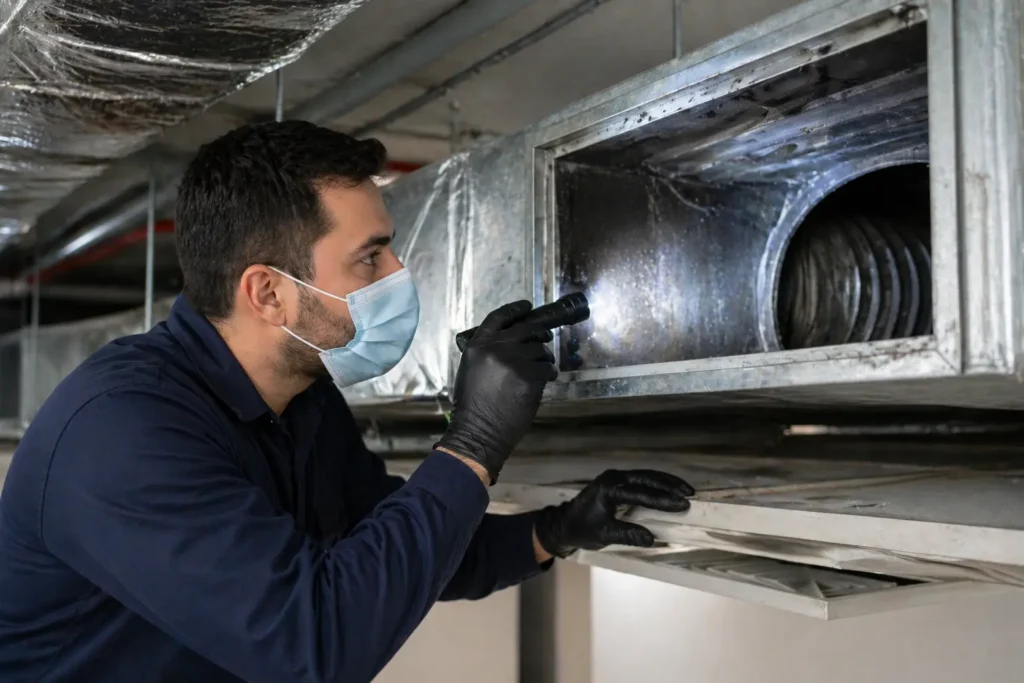
Step 1: Professional Inspection First
Attempting to tackle this without a clear picture of how far the infestation has spread is a common — and costly — mistake. A trained technician will use fibre-optic cameras and thermal imaging to trace rodent activity through your duct network, identify entry points, and assess the extent of nesting.
Skipping this step and jumping straight to traps is like treating symptoms without diagnosing the illness.
Step 2: Seal Entry Points Before Elimination
Here’s something many people get backwards: they try to kill the mice before sealing entry points. The result? Other mice from outside keep entering to replace those you’ve eliminated, and the problem never ends. Sealing comes first. Common entry points in Dubai properties include:
- Gaps around pipe penetrations through walls
- Poorly fitted duct joins and connectors
- Deteriorated duct tape or sealant at junctions
- Gaps behind kitchen cabinets leading to wall cavities connected to ducts
- Utility access panels with inadequate seals
Use galvanised steel mesh and proper HVAC-grade sealant — mice cannot chew through steel.
Step 3: Targeted Elimination
Once entry points are secured, elimination begins. For duct systems, snap traps placed near vent openings and within accessible sections of ducting are the most reliable and hygienic option. Rodenticide bait blocks can be used in locked tamper-resistant bait stations placed strategically outside the duct system.
Avoid using poison inside the ductwork directly. A dead mouse decomposing inside your ducts creates a whole new problem — the smell circulates through your entire building for weeks. Rodent pest removal inside HVAC systems should always be handled by trained professionals. This is not the place for DIY shortcuts.
Step 4: Duct Cleaning and Sanitation
After elimination is confirmed, the ductwork must be thoroughly cleaned. This involves:
- Removing all nesting materials, droppings, and contaminated insulation
- HEPA vacuum cleaning of accessible duct sections
- Application of antimicrobial and odour-neutralising agents
- Replacement of any damaged duct insulation
This step is non-negotiable. Leaving contaminated material inside the ductwork means your AC system continues to circulate allergens and pathogens long after the mice are gone.
Step 5: Ongoing Monitoring
Rodent pest control is not a one-time fix — it’s an ongoing commitment. Set up a monitoring programme with regular inspection of entry points, bait station checks, and seasonal assessments before summer and winter when rodent pressure increases.
Common Mistakes to Avoid
| Mistake | What to Do Instead |
|---|---|
| Using mothballs or peppermint oil as deterrents | Use steel mesh sealing and professional-grade treatments |
| Placing traps randomly without inspection | Map rodent pathways first, then place traps on active trails |
| Killing mice before sealing entry points | Seal all entry points before any elimination begins |
| Using poison bait directly inside ductwork | Use bait stations outside the duct system only |
| Handling droppings without protective gear | Always wear gloves and a mask; dispose in sealed bags |
| Ignoring early signs because it “seems small” | Act immediately — early treatment is faster and cheaper |
Not all pest control services are equally equipped to handle HVAC-specific rodent issues. When selecting a provider, look for:
- Licensing from the Dubai Municipality or the relevant emirate authority
- Experience with commercial and residential HVAC systems specifically
- The ability to offer a full-cycle service: inspection, elimination, sanitation, and proofing
- Transparent pricing and a written treatment plan
Whether you need pest control Dubai for a family apartment or a commercial office in Business Bay, choosing a company that understands the local environment and building types makes a significant difference in outcomes.
Rodent Control Across the Emirates
The challenge of rodent control Dubai is mirrored across the wider UAE. In Sharjah, older residential districts and industrial zones see significant rodent pressure due to proximity to warehousing and food logistics operations. Reliable pest control Sharjah providers familiar with these specific conditions are essential for effective long-term management.
Similarly, growing communities in Ajman — where construction activity creates constant disturbance of rodent habitats — benefit from proactive pest control Ajman programmes that address infestations before they escalate into larger structural problems.
Expert Tips for Long-Term Prevention
- Inspect your AC system annually — ideally before summer begins, when rodents are most likely to seek cool shelter
- Store food in sealed containers and eliminate accessible food waste near HVAC intake areas
- Keep external AC unit areas clean and uncluttered—stacked materials near outdoor units create harbouring spots
- Request duct sealing checks whenever HVAC servicing is carried out
- Report rodent sightings immediately to building management in multi-tenant properties—shared duct systems mean shared problems
Frequently Asked Questions
Can mice actually travel through air conditioning ducts?
Absolutely. Mice are remarkably agile and can squeeze through gaps as small as 6mm. HVAC ductwork provides an ideal travel network — enclosed, dark, and connecting multiple rooms and floors.
Is it safe to use the AC while there are mice in the ducts?
It’s not advisable. Running the system circulates airborne particles from mouse droppings and dander, which can trigger respiratory issues and allergies, particularly in children and those with asthma.
How long does professional mice removal from HVAC ducts take?
A thorough treatment — inspection, elimination, and sanitation — typically takes between one and three visits over one to two weeks, depending on the extent of the infestation.
Will the mice come back after treatment?
They can, if entry points aren’t properly sealed and monitoring isn’t maintained. A quality rodent pest control programme includes follow-up inspections to ensure the problem doesn’t recur.
How do I know if the mice are gone?
Absence of sounds, smells, and fresh droppings over a period of two to three weeks following treatment is a strong indicator. A post-treatment inspection using a camera system provides definitive confirmation.
Don’t Let Mice Ruin Your HVAC System and Your Health
Mice in HVAC ducts are a problem that quietly worsens the longer they’re ignored. In a city like Dubai — where buildings are sealed tight against the heat and air conditioning runs year-round — an undetected rodent colony inside your ducting can compromise air quality, damage infrastructure, and create genuine health risks for everyone inside.
The right approach isn’t panic—it’s action. Get a professional inspection, seal the gaps, eliminate the infestation, clean the system, and put a monitoring plan in place. That’s how you take back your indoor environment and keep it that way.
Still dealing with mice in your HVAC ducts? Contact New Star Pest Control, a trusted pest control company in Dubai, for fast and effective removal and long-term protection. Call 0588672492 to schedule your rodent inspection today!