
You water them every morning, feed them on schedule, and then one day you find leaves chewed to lace and a line of ants marching across your flower bed. It happens to almost every garden owner in the Emirates, from villa lawns in Dubai to small balcony planters in Sharjah.
The good news is that most garden pest problems are preventable. This guide covers what to look for, what to avoid, and how to keep your plants healthy through the UAE’s long, warm growing season.
Why Gardens in the UAE Attract So Many Pests
Warm weather, regular irrigation, and fresh greenery make a perfect home for insects and rodents. Add the humidity along the coast and pests breed almost all year round. Irrigated soil in a desert climate is like an oasis for them. If you have a garden here, assume pests will visit and plan for it.
The Most Common Garden Pests You Will Meet
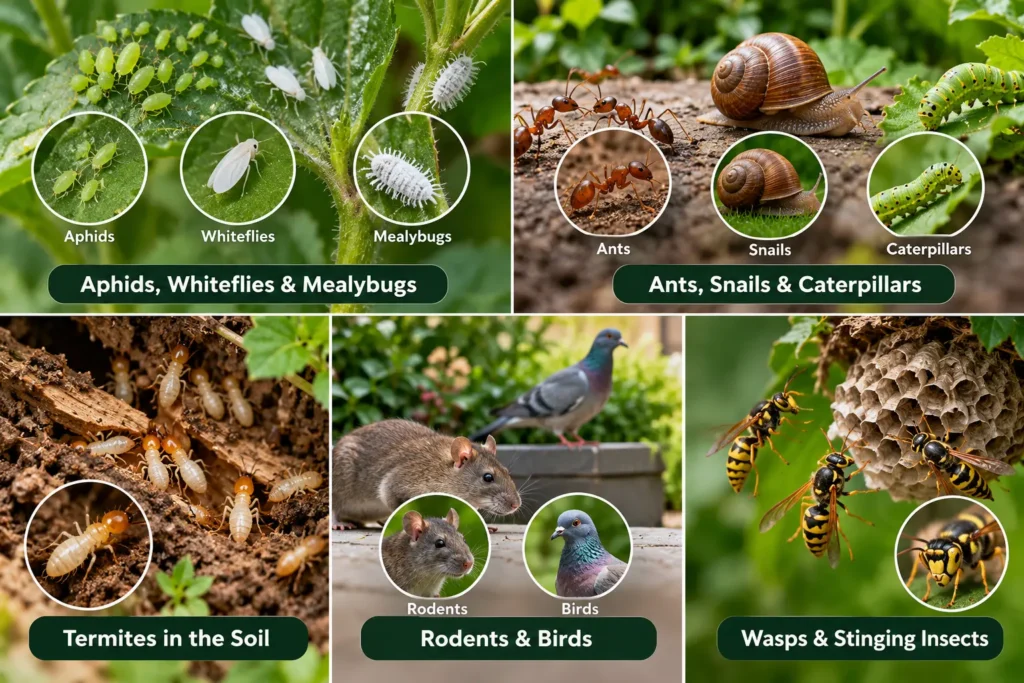
Aphids, Whiteflies and Mealybugs
These tiny sap-suckers gather under leaves and on new shoots. They leave behind a sticky residue called honeydew, which often turns into black mold. If your leaves look curled, yellow, or shiny and sticky, check the undersides first.
Ants, Snails and Caterpillars
Ants protect aphids because they feed on honeydew, so one problem usually feeds another. Snails and caterpillars are night workers. You wake up to ragged leaves and no culprit in sight.
Termites in the Soil
Termites do not only attack buildings. They can damage tree roots, wooden planters, fences, and garden furniture. If you spot mud tubes or hollow-sounding wood, a professional anti-termite treatment is the safest way to stop them before they reach your home.
Rodents and Birds
Rats dig up bulbs, gnaw on irrigation lines, and nest in dense shrubs. Fallen fruit and open compost bins attract them quickly. A reliable rodent pest removal plan keeps them away from both your plants and your house.
Birds can strip a fruit tree or vegetable patch in a single morning. Netting helps for small areas, while larger properties may need a bird control program.
Wasps and Stinging Insects
Wasps love quiet corners, thick hedges, and tree branches. They are useful pollinators, but a nest near a seating area is a real safety risk. Never try to knock one down yourself. Book a trained wasp removal service instead.
Early Warning Signs Your Garden Needs Help
Catching trouble early saves plants and money. Look out for:
- Holes, chew marks, or ragged edges on leaves
- Sticky leaves or a black, sooty coating
- Wilting plants even though the soil is moist
- Small mounds of loose soil or burrows near roots
- Droppings near planters, sheds, or irrigation points
- Mud tubes on walls, fences, or wooden structures
Take ten minutes each week to walk the garden and flip a few leaves. It is the cheapest form of protection you will ever get.
A Simple Step-by-Step Routine That Works
Effective pest control for gardens is mostly about habits, not harsh chemicals. Here is a routine that experienced gardeners rely on:
- Inspect weekly. Check leaf undersides, stems, and soil surface.
- Clean up debris. Remove dead leaves, fallen fruit, and old pots where pests hide.
- Water smartly. Water early in the morning so the soil dries before evening.
- Prune for airflow. Dense growth traps moisture and shelters insects.
- Treat early. Use mild options such as neem oil or soapy water on small outbreaks.
- Call a professional when it spreads. If damage keeps returning, the source is usually bigger than what you can see.
Expert Tips From the Field
- Rotate and mix your plants. A single type of plant in a large patch invites a pest buffet.
- Welcome helpful insects. Ladybugs and lacewings eat aphids for free.
- Mulch carefully. Keep mulch a few centimeters away from trunks and walls to discourage termites and rodents.
- Store compost properly. A sealed bin keeps both rats and flies away.
- Plan for the season. Pests spike after summer humidity and again after winter rains, so schedule treatments before those peaks.
Not every pest stays outside. Garden insects often drift indoors, and a trusted insect control service can protect your home and your landscape together.
Common Mistakes to Avoid
Many garden problems get worse because of well-meant mistakes.
Overwatering. Soggy soil attracts fungus gnats, snails, and root-rotting pests.
Spraying everything. Broad-spectrum sprays kill helpful insects along with the harmful ones, and pests often return stronger.
Ignoring the neighbors. Pests do not respect fences. If the next villa has an infestation, yours is next.
Leaving drains and compost uncovered. Damp corners near a garden are a favorite spot for roaches, and a proper cockroach control treatment is far easier before they spread indoors.
Bringing in untreated items. Outdoor cushions, secondhand furniture, and plant pots can carry hitchhikers into your home. If that ever leads to a nighttime problem, specialist bed bug pest control is the only reliable fix.
Benefits of Professional Garden Pest Management
Doing everything yourself works for small problems. For larger or repeat issues, professional help brings real advantages:
- Correct identification, so you treat the right pest the first time
- Safe products and methods for children, pets, and edible plants
- Long-term prevention instead of short-term fixes
- Less damage to lawns, trees, and expensive landscaping
- More time to enjoy your garden instead of fighting it
Serving Gardens Across the Emirates
Pest pressure changes from one emirate to another, so local experience matters.
Homeowners in the capital’s busiest emirate can rely on professional pest control in Dubai for villas, townhouses, and large landscaped compounds.
If your property is in the north, pest control Sharjah teams understand the older neighborhoods and the humid coastal conditions there.
For smaller plots and family homes, pest control Ajman services offer quick response and practical, budget-friendly plans.
Further along the coast, pest control Ras Al Khaimah covers the greener, more rural gardens where rodents and insects are especially active.
Frequently Asked Questions
How often should I treat my garden for pests?
A weekly check and a professional treatment every two to three months is a good rhythm for most UAE gardens. Heavily planted properties may need more frequent visits.
Are garden pest treatments safe for pets and children?
Yes, when the right products are applied by trained technicians. Keep pets and children away from treated areas until the surface is dry.
Can I control garden pests naturally?
For minor problems, neem oil, soapy water, and beneficial insects work well. Serious infestations usually need professional treatment.
Which time of year is worst for garden pests?
Pests are active throughout the year, but activity peaks after humid summer months and again after winter rain.
How do I know if termites are in my garden?
Look for mud tubes, damaged wood, and weak or dying tree roots. A professional inspection will confirm it quickly.
Protect Your Garden With New Star Pest Control
A healthy garden is not pest-free by luck. It is the result of regular checks, smart watering, clean surroundings, and acting early. Follow these habits and your plants will reward you with color, shade, and fresh produce all year long. Done consistently, pest control for gardens protects the time and money you have already put into your outdoor space.
Tired of fighting pests on your own? The team at New Star Pest Control offers safe, effective, and affordable solutions for gardens, villas, and commercial properties across the UAE.
Call us today or visit starpestcontroluae.com to book your free inspection.