
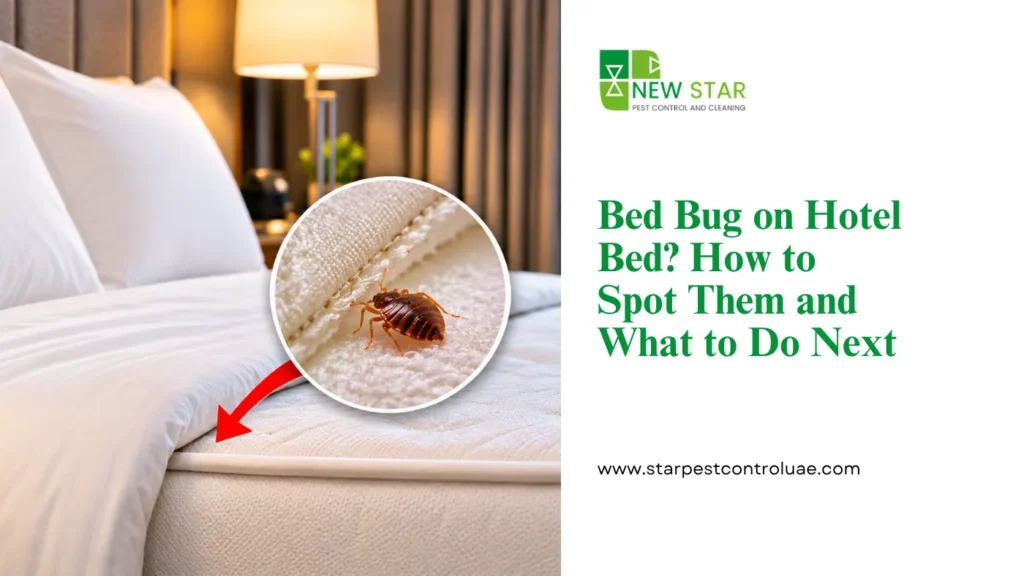
Imagine checking into a hotel after a long journey, settling into your room, and getting ready for a comfortable night’s sleep. Everything looks clean, the bed is neatly made, and the room appears well-maintained. But have you checked what’s hiding beneath the mattress? Bed bugs are small insects that can turn a relaxing hotel stay into an uncomfortable experience. They often hide in mattress seams, headboards, bed frames, and other tiny spaces close to where people sleep. Even hotels with high cleaning standards can experience bed bug problems because these pests can travel through luggage, clothing, and personal belongings. Knowing how to identify a bed bug on hotel bed surfaces before unpacking can help you avoid bringing these unwanted guests home. A quick inspection takes only a few minutes but can save you from weeks of inconvenience. In this guide, we explain how to recognise bed bugs, where to look for signs of an infestation, what to do if you find them, and how to protect your belongings after a hotel stay.
What Do Bed Bugs Look Like?
Bed bugs are small, flat, oval-shaped insects that feed on human blood. Adult bed bugs are usually around 4 to 7 millimetres long and have a reddish-brown appearance. After feeding, their bodies become larger and darker. Although they are small, bed bugs can often be spotted with careful inspection, particularly against light-coloured bedsheets.
Here are some common characteristics:
- Colour: Reddish-brown, becoming darker after feeding.
- Shape: Flat and oval before feeding.
- Size: Similar to an apple seed when fully grown.
- Movement: They crawl quickly but cannot fly or jump.
- Hiding behaviour: They prefer dark, narrow spaces close to sleeping areas.
Young bed bugs, known as nymphs, are smaller and lighter in colour. Their eggs are tiny, whitish, and difficult to notice without close inspection.
7 Warning Signs of Bed Bugs in a Hotel Room
You do not always need to see a live insect to identify a possible bed bug problem. Several other signs can indicate their presence.
1. Small Blood Stains on Bedsheets
One of the first things to check is the bedsheet. Small reddish or rusty-coloured spots may appear when bed bugs are accidentally crushed after feeding.
These stains can be easy to overlook, especially on patterned or darker bedding. However, unexplained blood spots should encourage you to inspect the mattress more carefully.
2. Dark Spots on the Mattress
Tiny black or dark brown spots on mattress seams, fabric folds, and bed frames may be bed bug droppings.
Unlike ordinary dust, these marks can appear concentrated around hiding places. They may also leave small dark stains when wiped with a damp cloth.
3. Shed Insect Skins
Bed bugs shed their outer skin several times as they grow. These discarded skins are usually pale yellow or transparent and resemble tiny insect shells.
Look for them around mattress edges, headboards, and cracks in the bed frame.
4. Live Bed Bugs
Finding a live insect is one of the clearest warning signs.
Check the mattress carefully for small, reddish-brown insects moving along the seams or hiding beneath fabric edges. Do not assume that finding just one means there is no larger infestation.
5. Tiny White Eggs
Bed bug eggs are approximately 1 millimetre long and have a white or translucent appearance. They are often attached to surfaces in protected areas.
You may find them in mattress stitching, furniture joints, and small cracks near the bed.
6. Unusual Musty Smell
A room with a significant bed bug infestation may have a slightly sweet, musty smell. This odour comes from chemicals released by the insects.
However, smell alone is not a reliable way to identify bed bugs. Always look for physical evidence.
7. Itchy Red Bites
Bed bug bites can appear as small, red, itchy marks on exposed areas of the body. Some people notice bites arranged in lines or clusters.
However, reactions vary from person to person. Some individuals may not develop visible marks at all. Bites alone cannot confirm a bed bug infestation.
Where Should You Check for Bed Bugs in a Hotel Room?
Bed bugs do not live only on mattresses. They can hide in several places around a sleeping area, making a proper inspection important.
Before unpacking, check these areas:
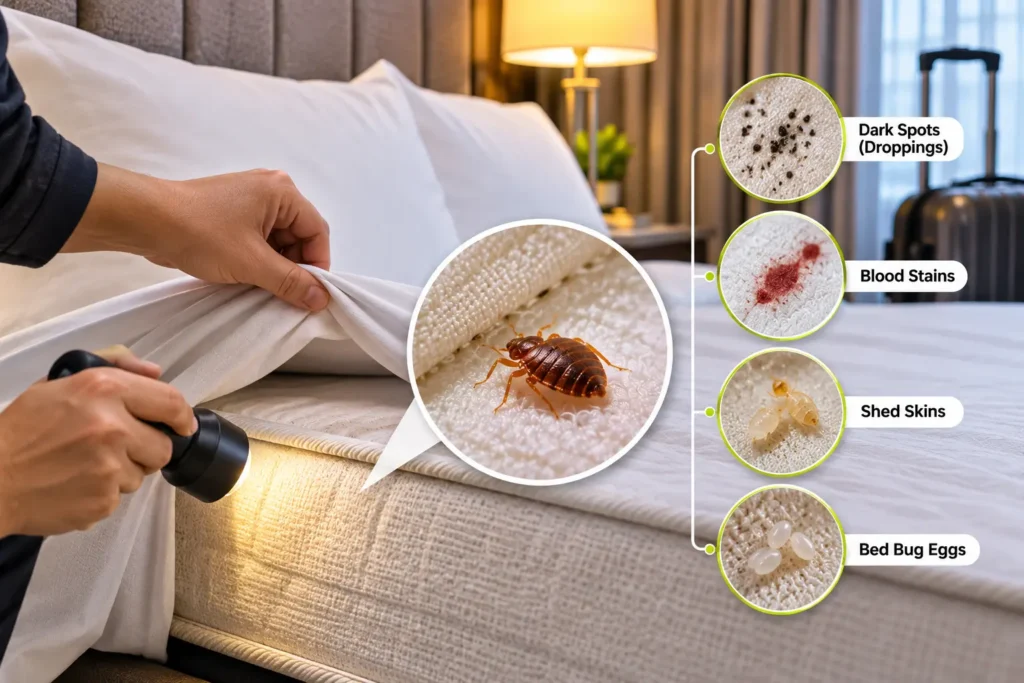
- Mattress seams: Inspect the stitching, corners, labels, and folded edges.
- Headboard: Look behind and underneath the headboard, especially around joints and screws.
- Bed frame: Check cracks, wooden joints, and small openings.
- Pillows: Examine pillow seams and underneath pillow covers.
- Bedside furniture: Inspect drawers, handles, and furniture joints.
- Upholstered chairs: Check fabric folds and seams, particularly furniture near the bed.
- Luggage racks: Examine the joints and corners before placing your suitcase on them.
Using your phone’s flashlight can help you spot insects and small stains in difficult-to-see areas.
What Should You Do If You Find Bed Bugs in a Hotel Bed?
Discovering bed bugs in your hotel room can be stressful, especially when you are travelling with family. However, taking the right steps immediately can prevent the problem from following you home.
Follow these steps:
1. Stop Using the Bed Immediately
Avoid sleeping in the affected bed or placing clothing and personal belongings on it. Do not attempt to handle the insects unnecessarily.
2. Keep Your Luggage Away
Move your suitcase away from the bed and avoid placing it on carpets or upholstered furniture. If possible, keep it in a clean, isolated area until the hotel staff provides further instructions.
3. Inform Hotel Management
Contact the reception or hotel management immediately. Explain what you found and show them photographs if available.
Request another room that is not directly next to or above the affected room, as bed bugs can spread through adjoining spaces.
4. Protect Your Clothing and Belongings
Keep clothing in sealed plastic bags. Wash suitable items using the hottest temperature permitted by their care labels and dry them thoroughly using a hot dryer setting where appropriate.
Items that cannot be washed may require professional treatment.
5. Inspect Your Belongings Before Leaving
Check your suitcase, shoes, bags, and personal items carefully. Pay particular attention to seams, pockets, zippers, and folds.
6. Monitor Your Home After Returning
Once home, avoid placing your luggage directly on beds, sofas, or carpets. Inspect your belongings and keep potentially affected items separate until they have been checked and treated if necessary.
If you suspect bed bugs have entered your home, arrange a professional inspection promptly.
Expert Tips to Prevent Bed Bugs During Hotel Stays
A few simple precautions can reduce your chances of encountering bed bugs while travelling.
- Inspect the mattress and headboard before unpacking.
- Keep suitcases on luggage racks after inspecting them.
- Avoid storing clothes in hotel drawers without checking them.
- Keep dirty laundry in sealed bags.
- Inspect luggage thoroughly before bringing it into your home.
- Use a protective luggage cover during travel.
- Report suspicious insect activity to hotel management immediately.
Expert tip: Make mattress inspection part of your regular hotel check-in routine. It is much easier to prevent bed bugs from entering your luggage than to eliminate an infestation after they reach your home.
Common Mistakes to Avoid When Dealing with Bed Bugs
Many travellers unknowingly make mistakes that increase the chances of spreading bed bugs.
Here are some common ones to avoid:
1. Ignoring early warning signs: Small black spots, shed skins, and unexplained stains should never be overlooked.
2. Placing luggage on the bed: Suitcases can easily pick up bed bugs from infested surfaces.
3. Moving belongings into another room without inspection: This can transfer insects to a new location.
4. Using random insect sprays: Applying household insecticides without proper knowledge may scatter bed bugs into additional hiding places.
5. Assuming bites are the only evidence: Not everyone reacts to bed bug bites, so physical inspection is essential.
6. Ignoring the problem after returning home: A single unnoticed insect can potentially develop into a larger infestation over time.
Why Professional Bed Bug Control Is Important
Bed bugs are difficult to eliminate because they hide in narrow spaces, reproduce quickly, and can survive in protected areas for extended periods. Treating only the visible insects rarely solves the entire problem. Professional bed bug pest control Dubai services help identify the extent of an infestation and determine the most appropriate treatment approach.
Here are some advantages of professional treatment:
- Accurate identification: Professionals can distinguish bed bugs from other household insects.
- Detailed inspection: They examine mattresses, furniture, cracks, and other potential hiding areas.
- Targeted treatment: Appropriate methods are selected based on the level of infestation.
- Egg and nymph control: Treatment plans consider different stages of the bed bug life cycle.
- Prevention advice: Experts provide practical recommendations to reduce the chances of another infestation.
Choosing a reliable pest control company in Dubai can make a significant difference when dealing with persistent bed bug problems. Whether the issue is discovered in a hotel, apartment, or residential property, timely professional attention helps prevent further spread.
When Should You Contact a Professional Pest Control Service?
Not every insect sighting requires extensive treatment, but certain situations should not be ignored.
Consider contacting a professional if:
- You repeatedly find live bed bugs around sleeping areas.
- Dark stains, eggs, or shed skins appear in multiple locations.
- You continue experiencing unexplained bites after changing rooms.
- You suspect bed bugs have spread through your luggage into your home.
- DIY treatments have failed to resolve the issue.
For properties experiencing repeated infestations, professional pest control Dubai services can help assess the situation and recommend a suitable treatment plan.
Frequently Asked Questions About Bed Bugs in Hotel Rooms
1. Can a clean hotel room have bed bugs?
Yes. Bed bugs are not necessarily associated with poor hygiene. They can enter hotels through guest luggage, clothing, and personal belongings. Even well-maintained hotels can experience infestations.
2. Can bed bugs travel home in your luggage?
Yes. Bed bugs can hide in suitcase seams, pockets, clothing, and other personal belongings. Inspecting and treating potentially affected items before bringing them into your living space can reduce the risk.
3. How quickly do bed bugs spread?
Bed bugs can spread through infested furniture, luggage, clothing, and other belongings. Their population can increase over time if suitable feeding opportunities are available. Early detection is important to prevent a larger infestation.
4. Do bed bugs disappear after changing hotel rooms?
Not necessarily. Moving rooms does not guarantee that the problem is resolved. Bed bugs may already be present in your luggage or personal belongings. Always inspect your items before moving to another room.
5. Can I remove bed bugs using ordinary household insect spray?
Ordinary household sprays may kill some visible insects but often fail to reach hidden bed bugs and their eggs. Professional inspection and appropriate treatment are generally more effective for established infestations.
Final Thoughts
Finding bed bugs in a hotel room is never a pleasant experience, but knowing what to look for can help you respond before the problem becomes bigger. Always inspect the mattress, headboard, bed frame, and nearby furniture before unpacking. Pay attention to small stains, dark spots, shed skins, and live insects. If you discover signs of an infestation, inform hotel management and take precautions to protect your belongings.
If bed bugs make their way into your home, do not wait for the infestation to grow. New Star Pest Control provides professional pest management solutions to help identify and address unwanted pest problems.