
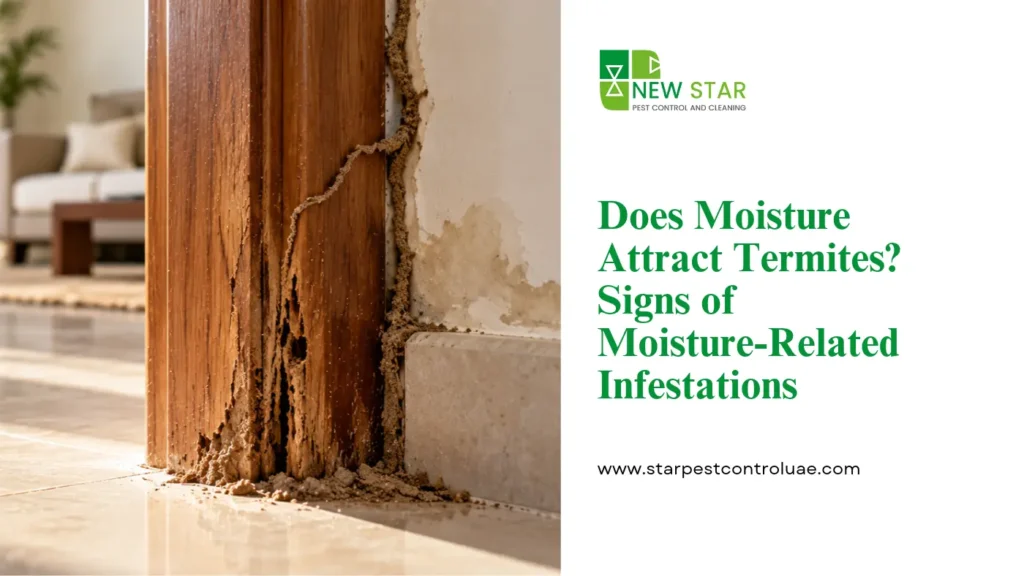
A small damp patch under the kitchen sink. A slightly swollen skirting board near the bathroom. Most homeowners shrug these off as minor maintenance jobs. Termites see them as an open invitation. Behind that harmless-looking dampness, a colony may already be feeding quietly, and by the time the damage shows, repairs can run into thousands of dirhams. So the question every property owner should ask early is simple: does moisture attract termites?
Does Moisture Attracts Termites?
Termites need water to survive. Their soft bodies dry out fast, so they naturally head toward damp soil, wet timber and humid corners where they can stay hydrated while they feed.
Moisture also does something else. It softens wood, which makes cellulose much easier to chew through. A dry, sound beam is hard work for a termite. A damp, slightly rotting one is a buffet. This is why the answer to does moisture attract termites is a firm yes, and why wet areas are almost always the first place we find activity during an inspection.
Subterranean Termites Love Wet Soil
Subterranean termites nest underground and travel up to your property through mud tubes. They rely on soil moisture, so leaking pipes, poor drainage and over-watered gardens next to your walls pull them in.
Drywood Termites Still Benefit From Humidity
Drywood termites can live inside dry timber without soil contact. Even so, humid rooms with poor ventilation help them thrive, and damp wood is easier for them to settle in.
Why Moisture Problems Are So Common in UAE Homes
Many people assume the desert climate keeps termites away. In reality, modern UAE buildings create their own damp pockets:
- AC condensation lines that drip or clog
- Leaking pipes inside walls and ceilings
- Irrigation systems that soak soil near foundations
- Bathrooms and kitchens with weak ventilation
- Coastal humidity, especially in summer
Property owners who want reliable pest control in Dubai often tell us the infestation began near a hidden leak they never knew about. Dubai’s mix of high-rise apartments, villas and older buildings means moisture can hide in many places.
Signs of a Moisture-Related Termite Infestation
Termites are quiet and patient, so you have to know what to look for. Check for these signs, especially near damp areas:
- Mud tubes on walls, foundations or beams. These pencil-thin tunnels protect termites from dry air.
- Hollow-sounding wood. Tap skirting boards, door frames and window frames. A papery or hollow sound is a red flag.
- Discarded wings near windows or light sources, which often mean a swarm has recently entered.
- Frass, tiny wood-colored pellets that look like sawdust, usually from drywood termites.
- Bubbling or peeling paint that looks like water damage but has no obvious leak.
- Sticking doors and windows caused by warped, tunnel-weakened frames.
- Soft or sagging floors in kitchens, bathrooms and laundry areas.
If you spot two or more of these, do not wait. Termites work around the clock.
The Hotspots to Inspect First
- Under sinks and around washing machines
- Behind water heaters and AC units
- Bathroom door frames and cabinets
- Garden walls and wooden fences
- Storage rooms with cardboard and old furniture
Expert Tips to Keep Moisture and Termites Out
After years of seeing the same patterns in homes across the Emirates, a few habits make the biggest difference.
Fix leaks quickly. A dripping tap or sweating pipe is enough to sustain a colony. Repair it the same week, not next month.
Improve ventilation. Run extractor fans in bathrooms and kitchens, and keep storage rooms aired out.
Manage your garden. Keep sprinklers pointed away from walls. Do not stack firewood, wooden planters or cardboard against the building.
Service your AC regularly. Blocked condensate drains are one of the most overlooked causes of hidden dampness.
Schedule yearly inspections. Many families in the northern emirates rely on pest control Ajman teams for seasonal checks, because a trained eye spots what homeowners miss.
Common Mistakes to Avoid
Even well-meaning homeowners make errors that give termites more time.
- Treating only the visible damage. Termites you see are a tiny part of the colony.
- Using store-bought sprays alone. They may kill a few workers but rarely reach the nest.
- Ignoring small leaks. Minor dampness is exactly what termites look for.
- Painting over damaged wood. This hides the problem and lets it grow.
- Delaying inspection after a flood or plumbing issue. Moisture events are prime time for new infestations.
If you are in the northern region and need help fast, searching for pest control Ras Al Khaimah specialists who understand local building types and coastal humidity can save you a lot of trouble.
What Professional Treatment Actually Does
Professional inspection goes beyond spotting termites. A technician measures moisture levels, traces the source of the dampness and finds where the colony is entering. Then the right solution is chosen for your property type.
A proper anti termite treatment typically creates a protective barrier in the soil, treats affected timber and targets the colony itself, not just the workers you can see. Done well, it protects the structure for years, especially when combined with moisture control.
Benefits of Acting Early
Catching a moisture-related infestation quickly pays off in several ways:
- Lower repair costs. Early treatment is a fraction of the price of replacing beams, flooring or cabinetry.
- Protected property value. Termite damage can complicate resale or rental.
- Safer living spaces. Weakened wood is a structural risk, not just a cosmetic one.
- Peace of mind. You stop guessing and start knowing.
Whether you manage a villa, an office or a rental building, choosing the best pest control Sharjah provider means getting inspection, treatment and follow-up from people who understand how local conditions affect termite behavior.
Frequently Asked Questions
Can termites live in completely dry wood?
Drywood termites can, but they still do better in humid conditions. Subterranean termites need moisture almost constantly.
How quickly can termites damage a damp area?
It depends on colony size, but a mature colony can cause serious structural harm within months, and faster in softened wood.
Will fixing the leak get rid of termites?
Not on its own. Repairing the leak removes the attraction, but an existing colony will keep feeding. You still need professional treatment.
How often should I get my property inspected?
Once a year is a good rule. Inspect sooner after any flooding, plumbing repair or renovation.
Are termite problems covered by home insurance?
Most policies exclude termite damage, which is another reason prevention matters.
Worried About Termites?
Termites do not need much: a little water, a little wood and a little time. Moisture supplies the first two, and neglect supplies the third. Stay alert to leaks, learn the warning signs, and act the moment something looks off. A dry home is a hard home for termites to enter, and a professional inspection is the surest way to know where you stand.
Do not wait for the damage to show. New Star Pest Control offers thorough inspections, moisture assessments and long-lasting termite solutions for homes and businesses across the UAE. Our trained team will find the source, treat the problem and help you keep it from returning.