
You switch off the lights and the house goes quiet. Then you hear it: a faint rustle behind the plaster. The next morning, a single roach scuttles across the kitchen floor and you tell yourself it was a stray. It rarely is. By the time one shows up in plain sight, dozens more are usually hiding nearby, and many have settled deep in the structure. If you suspect cockroaches inside walls, this guide will help you confirm it and deal with it properly.
Why Cockroaches Move Into Your Walls
Cockroaches want three things: warmth, moisture and darkness. Wall voids offer all three. Gaps around pipes, cracked grout, loose switch plates and hollow skirting boards work like open doors. In UAE homes, AC condensation, kitchen plumbing and year-round heat make it even easier for them. Once inside, they breed fast. A female German cockroach carries an egg case holding up to 40 eggs, and she produces several in her lifetime. That is how a small problem becomes a serious one within weeks.
Signs of Roaches Living Behind Your Walls
Roaches are secretive, so you need to look for clues rather than the insects themselves.
- Dark, pepper-like droppings near skirting boards, sockets and the back of cabinets
- Greasy smear marks along walls where they brush past
- A musty, oily smell that gets stronger in closed rooms
- Small brown capsule-shaped egg cases
- Shed skins in corners and under appliances
- Roaches in daylight, which often means their hiding spots are overcrowded
- Scratching or rustling at night
The Torch and Tape Test
Wait ten minutes in a dark kitchen or bathroom, then switch on a torch and check the wall edges. Movement near cracks tells you a lot. You can also stick strips of double-sided tape along skirting boards and behind appliances, then check them the next morning. The spots with the most catches show you where the traffic is heaviest.
Identify The Cockroach
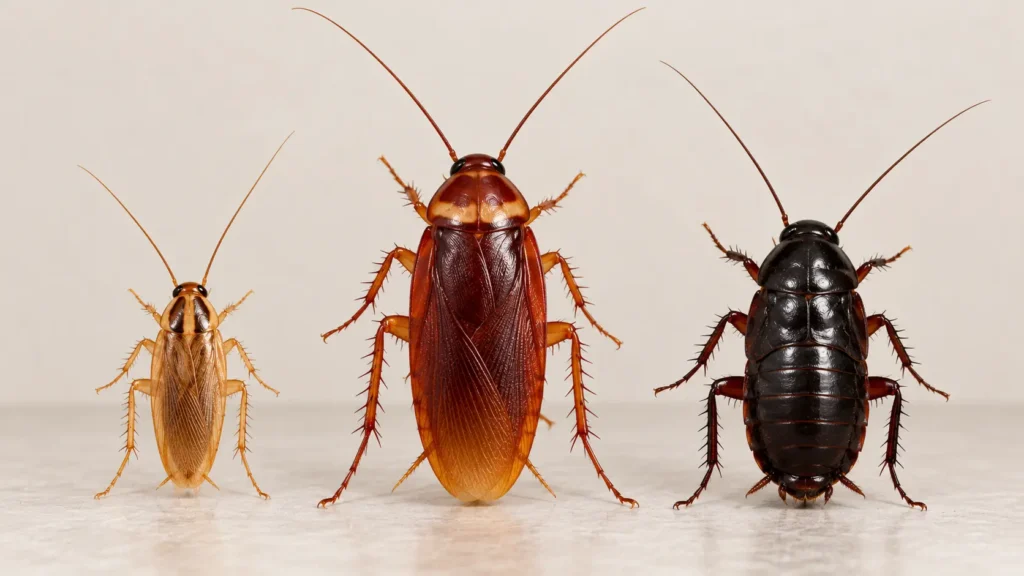
The species changes the treatment, so it is worth knowing.
- German cockroach: Small and light brown, with two dark stripes behind the head. This is the most common indoor pest and the usual wall dweller.
- American cockroach: Large and reddish brown. It often enters through drains and sewers.
- Oriental cockroach: Dark and glossy. It prefers cool, damp corners.
German roaches are the hardest to remove without help, because they tuck themselves into tiny cracks and reproduce quickly.
Why Store-Bought Sprays Rarely Work
Aerosols kill what they touch, and roaches in wall voids are not being touched. Worse, repellent sprays can drive them deeper into the structure or into a neighbour’s flat. Roaches can also build resistance to products that are used again and again. That is why many homeowners feel the problem is solved for a week, only to see it return.
How to Get Rid of Cockroaches Inside Walls Step by Step
1. Cut Off Food and Water
Store food in sealed containers, wipe counters every night and take rubbish out daily. Fix dripping taps and dry the sink before bed. Without water, roaches struggle to survive.
2. Seal Entry Points
Fill cracks with silicone sealant or filler. Seal around pipes under sinks, fit door sweeps and replace loose or damaged switch plates. Seal only after treatment, so you do not trap live roaches inside.
3. Use Gel Baits Wisely
Place small dots of gel bait near hinges, wall edges and behind appliances. Roaches carry it back to their hiding spots, and the colony takes it up. Avoid spraying near the baits, because repellents can make roaches avoid them.
4. Bring in Professionals for Wall Voids
Reaching the cavity is the hard part, and this is where professional cockroach control service makes the difference. Technicians use targeted injection treatments and insect growth regulators that stop nymphs from maturing. This breaks the breeding cycle instead of just thinning the numbers.
What a Proper Professional Visit Looks Like
A reliable insect control service should never just spray and leave. Expect a full inspection of kitchens, bathrooms, ducts and wall cavities first. The technician should then explain what they found, which species you have and what treatment they plan to use. A good provider also tells you how to prepare the home, how long to stay out of treated areas and when to expect results. Ask about follow-up visits too. One treatment rarely clears an established colony.
Pest Help Across the Emirates
Roaches do not respect city limits, and the best approach depends on your building type and local conditions.
Dubai
Dense apartment towers share plumbing risers and wall cavities, so roaches can travel between units. If you live in a high-rise, pest control in Dubai often works best when neighbouring units are treated too.
Sharjah
Older villas and family flats often have more cracks and gaps. Choosing the best Pest control in Sharjah means looking for a team that checks the structure itself, not just the visible areas.
Ajman
Humid conditions near the coast keep roaches active for most of the year. Reliable pest control Ajman services should include both treatment and sealing advice.
Ras Al Khaimah
Villas with gardens and drainage lines attract larger roaches that find their way into walls. Dependable pest control in Ras Al Khaimah covers outdoor perimeters as well as indoor spaces.
Expert Tips to Keep Roaches From Coming Back
- Clean behind and under the fridge, cooker and washing machine every month
- Fix leaks quickly, even small ones under sinks
- Keep pet food covered and remove bowls at night
- Do not stack cardboard boxes in storage rooms, since roaches love them
- Check grocery bags and delivery boxes before bringing them in
- Run a quick torch check around kitchen and bathroom walls once a month
- Book a routine inspection if you have had an infestation before
Frequently Asked Questions
Can cockroaches live in wall cavities?
Yes. Hollow walls, gaps around pipes and spaces behind cabinets give roaches warmth, moisture and shelter. They can live and breed there for months without being seen.
How do I know if roaches are in my walls and not just the kitchen?
Look for droppings and smear marks along wall edges, listen for night-time rustling, and note any musty smell. Seeing roaches in daylight is another strong sign that hiding spots are full.
Is it safe to spray insecticide into wall gaps myself?
It is not recommended. Misuse can expose your family and pets to chemicals, and sprays often push roaches deeper into the structure. Professionals use controlled products and the right tools for wall voids.
How long does it take to clear an infestation?
Light cases may improve within a couple of weeks. Established colonies usually need follow-up visits, because new nymphs can hatch after the first treatment.
Will sealing cracks alone solve the problem?
No. Sealing helps prevent re-entry, but roaches already inside need to be treated first. Otherwise you may trap them in the structure.
Get Rid of Roaches for Good with New Star Pest Control
Roaches in your walls are not a sign of a dirty home. They are a sign of an opening, a little moisture and a lot of patience on their part. The earlier you spot the signs, the easier the fix. Cut off food and water, seal the gaps, use baits carefully and get professional help when the problem is hidden. Act quickly, and the rustling behind your walls will become a story you tell, not a sound you live with.
Tired of hearing scratching in the walls? The trained team at New Star Pest Control finds the source, treats it safely and helps you keep it from returning. Contact us to book an inspection.