
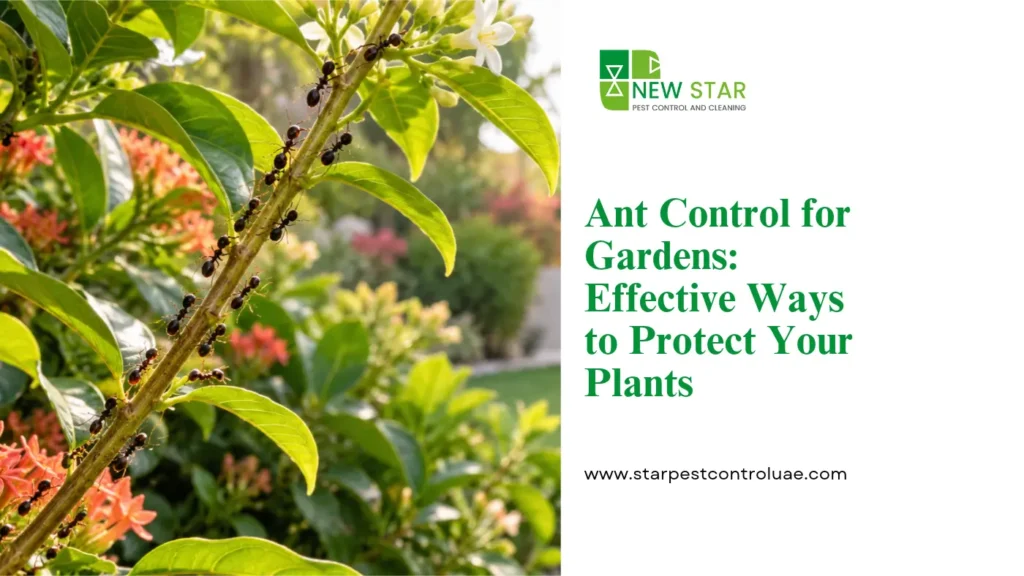
You water your plants, feed the soil, and trim the hedges. Then one morning you notice a thin black line of ants marching up your favorite shrub. A week later, the leaves are curling, sticky, and dotted with tiny green insects.
Ants rarely destroy a garden directly. The real damage happens behind the scenes, and by the time you see it, the colony is already settled. This guide to ant control for gardens shows you how to spot the problem early, stop it safely, and keep your plants thriving.
Why Ants in Your Garden Are More Than a Nuisance
A few ants walking across a path are harmless. A large, active colony is a different story. Ants protect and farm sap-sucking insects like aphids, mealybugs, and scale. In return, they collect the sugary honeydew these pests produce. The ants guard their “livestock” from natural predators such as ladybirds, which means pest numbers explode.
Here is what that looks like in practice:
- Curled, yellowing, or sticky leaves
- Black sooty mould growing on honeydew
- Stunted new growth on shrubs and flowering plants
- Wilting seedlings where nests disturb the roots
How to Tell If Ants Are Hurting Your Plants
Not every ant sighting needs action. Look for these signs before you reach for any treatment.
Visible Warning Signs
Check the stems and the undersides of leaves. If ants are climbing up and down in steady lines, they are probably tending something. Look closely for aphids or a shiny, sticky coating.
Hidden Signs in the Soil
Small mounds of fine soil around the base of plants suggest a nest below. Pots and raised beds are popular nesting spots because the soil stays warm and loosens easily.
Signs of Trouble Beyond the Garden
When trails lead from your garden into walls, kitchens, or storage areas, the colony has bigger plans. In that case, professional ant pest removal keeps the problem from spreading indoors.
Know Your Garden Ants
Different ants cause different problems. A quick comparison helps you decide how to respond.
| Ant Type | Appearance | Garden Impact | Typical Nest Location |
| Black garden ants | Small, dark, shiny | Farm aphids, disturb roots | Soil, under pots, paving gaps |
| Red or brown ants | Reddish, medium size | Scavenge and may sting | Lawns, bare soil |
| Pharaoh ants | Tiny, pale yellow | Move indoors easily | Walls, hidden cavities |
| Carpenter ants | Large, dark | Nest in damaged or damp wood | Rotting timber, tree stumps |
Natural Ways to Keep Ants Away From Plants
You do not always need chemicals. These simple methods work well for light infestations.
- Remove the honeydew source. Spray aphids off plants with a firm jet of water, or wipe them away. Without food, ants lose interest.
- Break the trail. Wipe ant lines with soapy water. This removes the scent path they follow.
- Use physical barriers. Wrap sticky tape or a smear of petroleum jelly around plant stems and pot legs.
- Avoid overwatering. Soggy soil attracts nesting ants and stressed plants attract sap-sucking pests.
- Clear garden debris. Fallen fruit, dead leaves, and old pots give ants shelter and food.
Natural deterrents such as diluted vinegar spray, cinnamon, or crushed mint can also discourage trails. They work best as a support, not a complete solution for large colonies.
When Garden Ants Need Stronger Action
Home remedies have limits. If you see multiple nests, ants returning within days, or trails entering your home, it is time to step up. Ant baits are often more effective than sprays. Worker ants carry the bait back to the nest and share it with the queen, which tackles the source. Sprays only kill the ants you can see and may scatter the colony into new areas.
For property owners dealing with persistent problems, trained technicians use targeted treatments that protect plants, pets, and children. If you live in the northern emirates, Our team offering pest control Ras Al Khaimah can inspect your garden and design a safe treatment plan.
Common Mistakes to Avoid
Even careful gardeners make these errors.
- Spraying strong insecticide on plants. This can harm beneficial insects, pollinators, and the plant itself.
- Killing only visible ants. The colony keeps producing workers until the nest is dealt with.
- Ignoring the aphid problem. Remove ants without removing aphids, and new ants soon return.
- Treating one spot only. Ants move their nests when disturbed, so check the entire garden.
- Using bait and spray together. Sprays can kill workers before they carry bait to the nest.
Preventing Ants Before They Settle
The best defence is a garden that gives ants no reason to stay.
Keep Your Garden Tidy
Trim plants away from walls and fences so ants cannot use them as bridges. Keep compost bins covered and store pet food indoors.
Improve Soil and Drainage
Well-draining soil discourages nesting. Add mulch carefully, since thick layers hold moisture and shelter ant colonies.
Watch for Other Pests
A garden with ant trouble often has other pest activity nearby. Gaps in fences and stored materials can also attract unwanted visitors, so consider rodent pest removal if you notice droppings or gnaw marks.
Wood is another concern. Old fence posts, timber decking, and tree stumps can hide more than ants. Ask a specialist about anti termite treatment if you see mud tubes or hollow-sounding timber.
Seasonal Tips for UAE Gardens
In a warm climate, ants stay active for much of the year. Irrigation systems create moist pockets that attract nesting colonies, especially in summer. Check drip lines, watering points, and shaded corners regularly.
After heavy rain or watering, ants often relocate and set up new nests. A quick weekly walk around your garden helps you catch these changes early. Residents in nearby cities have access to local help too. Searching for pest control Ajman is a good way to find a team familiar with regional pest patterns.
When to Call a Professional
Call in an expert if you notice any of the following:
- Ants returning within a week of treatment
- Several nests across the garden
- Trails entering your home or kitchen
- Damage to wooden structures
- Concerns about using chemicals around children or pets
Professionals identify the species, find the nest, and choose treatments that work. For homes near Sharjah, choosing the Best Pest control Sharjah means a technician who understands local conditions and plant safety.
Frequently Asked Questions
Are ants bad for my garden plants?
Ants do not usually eat healthy plants, but they protect aphids and similar pests that damage them. A small number of ants is harmless. Large, active colonies are worth dealing with.
What is the fastest way to remove ants from garden soil?
Baits are generally the most effective method because workers carry them to the nest. For small nests in pots, you can also repot the plant after checking the roots and soil.
Is it safe to use ant killer near vegetables and herbs?
Use only products labelled for garden or edible plant areas, and follow the instructions carefully. For vegetable beds, natural methods and professional advice are the safest options.
Why do ants keep coming back after treatment?
Usually the nest or the food source, like aphids, was not removed. Ants also move nests rather than disappear, so ongoing monitoring matters.
Do ants in the garden mean ants will enter my house?
Not always, but it is common. Ants forage widely, and cracks near doors and windows offer easy access. Keep the garden edge tidy and seal visible gaps.
Ants Taking Over Your Garden?
A healthy garden is a balanced one, and ants are part of that picture until they tip the balance. Watch for sticky leaves, soil mounds, and busy trails, and you can act before real damage appears. Start with simple natural steps, and bring in professionals when the problem keeps returning. A little attention each week keeps your plants thriving and your outdoor space enjoyable.
Do not let a small trail become a big problem. New Star Pest Control offers safe, effective ant treatments for gardens, villas, and homes across the UAE. Call us to book a quick inspection and protect your plants today.