
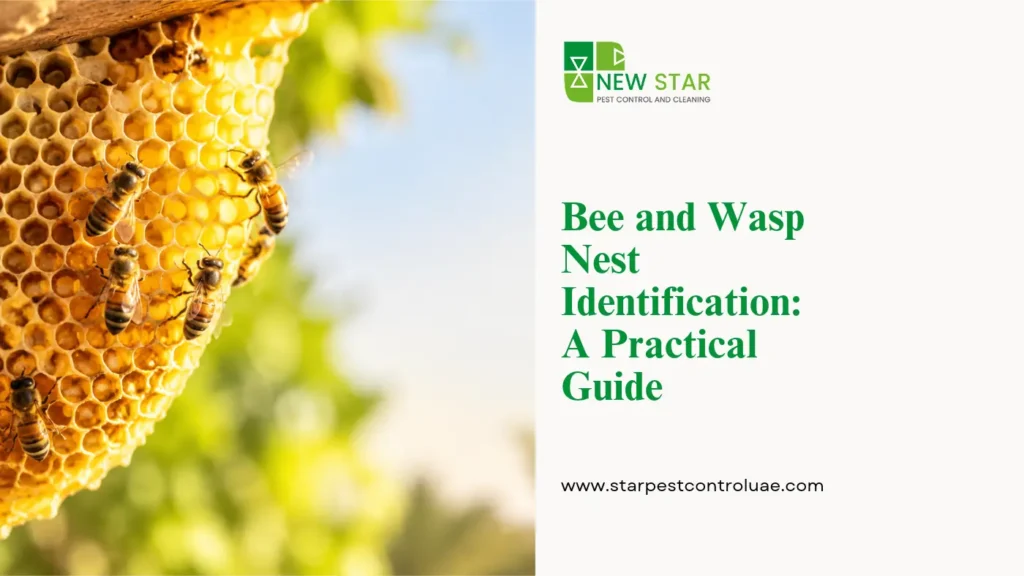
You spot a strange shape tucked under your balcony railing. It could be a harmless bee colony, or it could be a wasp nest that is days away from becoming a real problem. Most people guess, and guessing is how stings happen. Knowing what you are looking at changes everything, from how close you can safely stand to who you should call. Good bee and wasp nest identification takes about two minutes once you know what to look for, and it can save you from a painful mistake.
Why Getting It Right Matters
Bees and wasps look similar from a distance, but they behave very differently. Honey bees pollinate plants and rarely attack unless their hive is threatened. Wasps are scavengers and predators, and many species defend their nests aggressively. There is also a legal and ecological side. Honey bee colonies are often relocated rather than destroyed. Wasp nests near homes are usually removed. Treating them the same way leads to the wrong outcome for you and for the insects.
Start With the Nest Material
The quickest clue is what the nest is made of. Step back to a safe distance and look closely.
Wax Means Bees
Honey bees build with beeswax. You will see flat, vertical sheets of hexagonal cells, often hidden inside a wall cavity, roof void, or hollow tree. Fresh comb looks pale yellow or cream and may glisten with honey.
Paper Means Wasps
Wasps chew wood fibre and mix it with saliva to create a papery material. The result looks grey or brown, often with a swirled, marbled texture. If the nest looks like crumpled paper or thin cardboard, you are almost certainly dealing with wasps.
Mud Means Solitary Wasps
Small tubes or clay-like lumps stuck to walls, ceilings, or window frames usually belong to mud daubers. These wasps are solitary and far less aggressive, though a cluster of tubes still deserves a careful look.
Shape and Location: Reading the Clues
Where a nest sits tells you almost as much as what it looks like.
- Umbrella-shaped, open cells facing down: classic paper wasp nest, often under eaves, balconies, and pergolas.
- Football-shaped with a covered outer layer: a larger social wasp colony, often hanging from branches or sheltered ceilings.
- Single exposed comb wrapped around a branch: a dwarf honey bee colony, common in warm regions.
- Hidden inside a wall, roof, or meter box: often honey bees, though some hornets also nest in cavities.
- Holes drilled into wooden beams or furniture: carpenter bees, which tunnel rather than build a visible nest.
Bee vs Wasp Nest Comparison Table
Keep this table handy when you are trying to decide what is living on your property.
| Feature | Bee Nest | Wasp Nest |
| Material | Wax | Chewed wood pulp (paper) |
| Colour | Cream, yellow, or light brown | Grey, tan, or brown |
| Cell structure | Neat hexagons in vertical sheets | Open or enclosed paper cells |
| Common location | Cavities, trees, roof voids | Eaves, balconies, branches, ground |
| Insect body | Fuzzy, rounder, stockier | Smooth, slender, narrow waist |
| Temperament | Defensive only if disturbed | Often aggressive near the nest |
| Typical action | Relocation where possible | Professional removal |
Spotting the Insects Themselves
Sometimes the nest is hidden, but the traffic around it gives the game away. Bees are covered in fine hair, which helps them carry pollen. They have a plump, rounded look and fly with a steady, purposeful rhythm to flowers and back. Wasps look sleeker and shinier, with a clearly pinched waist and bright yellow and black warning colours. They tend to hover and dart around your food and bins. Watch the flight path for a few minutes from a distance. A steady line of insects entering one small opening points to a colony inside a cavity.
Expert Tips for Safe Inspection
A few habits keep you out of trouble while you investigate.
- Keep at least five metres away. Use your phone camera zoom, not your curiosity.
- Inspect in the cooler parts of the day. Insects are calmer in early morning and late evening.
- Take photos from several angles. A clear image helps a technician identify the species fast.
- Note the nest size and height. A golf ball sized nest is very different from one the size of a melon.
- Check for entry points. Cracks near the nest suggest the colony may be growing inside your structure.
If your property sits in Dubai, a quick call to a team offering pest control in Dubai gets a technician to your door for a proper inspection, so you do not have to guess.
Common Mistakes to Avoid
Well-meaning homeowners make the same errors again and again.
- Spraying a nest with household insecticide. This usually angers the colony without destroying it.
- Knocking a nest down with a stick or hose. Disturbed insects attack in numbers.
- Blocking the entrance. Trapped insects chew through plasterboard and end up inside your rooms.
- Assuming small means safe. A small nest in spring can become a large colony by late summer.
- Ignoring abandoned nests. Old paper nests can attract other pests or be reused.
Many people also assume every flying insect near their home is a threat. Honey bees are valuable, so identify before you act.
Seasonal Patterns in the UAE
In the UAE’s warm climate, insect activity is not limited to a single season. Nests can start at almost any time of year, and mild winters allow colonies to survive and grow. Late spring and autumn often see the biggest jump in new nests around balconies, villas, and rooftops. Regular inspections of sheltered spots, such as under roof tiles, pergolas, AC units, and garden sheds, catch problems early. A nest found in its first weeks is far easier to deal with than a mature colony.
When to Call a Professional
Some nests are fine to monitor from a distance. Others need expert help straight away. Call a professional if the nest is near a doorway, window, play area, or pet space. The same applies if anyone in your household is allergic to stings, if the nest is above head height, or if you cannot tell what species you are dealing with.
Homeowners in nearby emirates have local options too. Residents searching for pest control Ajman can reach a team that handles stinging insects safely. Wasp nests need extra care because the insects defend them fiercely. A dedicated wasp removal service brings the right protective gear and treatments.
One Pest Rarely Travels Alone
Properties that attract stinging insects often attract other pests too. Food waste, sweet drinks, and sheltered corners draw in a wider range of unwanted visitors. If you are already dealing with a nest, it makes sense to check for other issues, such as cockroach control needs in your kitchen or garage.
Structural pests deserve a look as well. Wood damage that you assume is from carpenter bees may actually be termites, so ask about anti termite treatment if you see tunnels or sagging timber.
Quick Identification Checklist
Run through this list whenever you need to put bee and wasp nest identification into practice on an unknown nest:
- Is it made of wax or paper?
- Is the shape flat and vertical, or round and layered?
- Are the insects hairy and round, or smooth and slim?
- Is it open to the air or hidden in a cavity?
- How aggressively do the insects react when you stay nearby?
Three or more answers pointing toward paper and slim bodies mean you should treat it as a wasp nest until a professional says otherwise.
Frequently Asked Questions
Can I remove a bee nest myself?
It is not recommended. Honey bee colonies can contain thousands of insects, and a disturbed hive responds quickly. Contact a professional who can assess whether the colony can be relocated safely.
How fast does a wasp nest grow?
A nest started in spring by a single queen can grow to hundreds of wasps within a few months. In warm climates, growth can be even faster, which is why early action matters.
Is an empty nest still dangerous?
Most wasps do not reuse an old nest, but empty nests can attract new colonies or other insects. Have it removed and the area checked for leftover activity.
Do wasps and bees ever share a nest?
No. Each species builds its own colony, though different nests can sit close together on the same building.
What should I do if I get stung near a nest?
Move away calmly, wash the area, and apply a cold compress. Seek medical help straight away if you notice swelling of the face, trouble breathing, or dizziness.
Need a Nest Checked Today?
A nest on your property is not a mystery you need to solve alone. Look at the material, the shape, the location, and the insects, and you will usually know what you are dealing with within minutes. The goal is simple: identify first, keep your distance, and let a trained team handle anything that looks risky. If your search began in the northern emirates, our team offering pest control Ras Al Khaimah can inspect the nest and advise on the safest next step.
Sharjah residents have support close by as well. Choosing the Best Pest control Sharjah means getting a trained technician who identifies the nest correctly before any treatment begins.
Not sure whether that nest is bees or wasps? New Star Pest Control offers fast inspections, safe removal, and honest advice across the UAE. Contact us to book a visit and make your home safe again.