
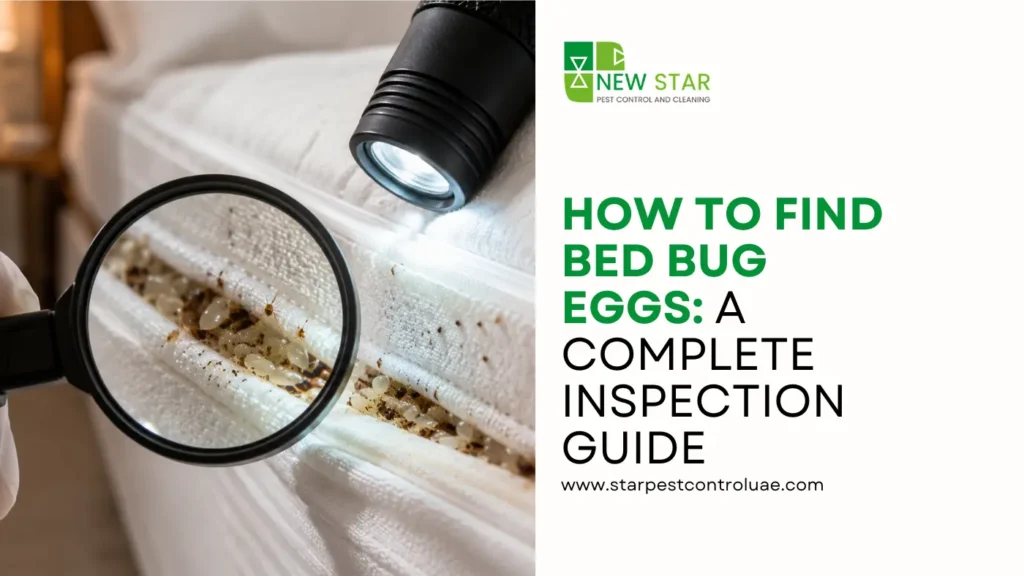
You wake up with a row of itchy bites on your arm. You check the mattress seams, find nothing obvious, and tell yourself it’s probably mosquitoes. A week later, the bites are back, and now there’s a faint musty smell in the bedroom. This is exactly how most bed bug infestations start in UAE homes, quietly, often after a trip, a house move, or a piece of secondhand furniture, and by the time people notice the adult bugs, the eggs have already hatched into a second generation.
Knowing how to find bed bug eggs early is the single biggest factor in stopping an infestation before it spreads through an entire apartment or villa. With the UAE’s mix of high-rise living, frequent travel, and shared building ventilation systems, bed bugs can move between units faster than most residents expect. These eggs are tiny, pale, and easy to miss unless you know precisely where to look. In this guide, we’ll walk through everything you need to inspect your home properly, spot the warning signs, and understand when it’s time to call in professional help.
What Do Bed Bug Eggs Actually Look Like?
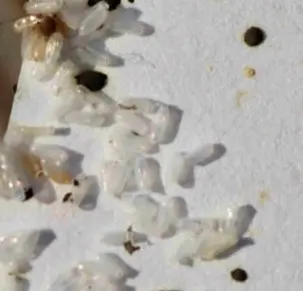
Before you can search effectively, you need to know your target. Bed bug eggs are:
- Roughly 1mm in length, about the size of a pinhead
- Pearly white or pale yellow in color
- Oval-shaped with a slightly sticky coating that helps them cling to surfaces
- Often found in small clusters rather than scattered individually
Because of their size and color, they blend in almost perfectly with white bedding, mattress piping, and light-colored wood, common in UAE hotel-style furnishings and rental apartments. Many residents mistake them for dust, lint, or sand at first glance. A magnifying glass and a bright flashlight are genuinely useful tools here, not just for professionals.
How to Find Bed Bug Eggs: A Room-by-Room Approach
The best way to search is methodical rather than random. Bed bugs prefer tight, dark crevices close to where people sleep, so start at the bed and work outward.
1. Inspect the Mattress and Box Spring
Strip the bed completely and check:
- Along every seam and tag
- Inside piping and folds
- The corners where the mattress meets the frame
- Underneath, particularly on the box spring fabric
2. Check the Bed Frame and Headboard
Wooden and upholstered frames with joints, screw holes, or carved detailing are prime real estate. Use a flashlight at a low angle; the glare often reveals egg clusters that direct light would hide.
3. Examine Nearby Furniture
Bed bugs don’t stay confined to the bed once a population grows. Check nightstands, dresser drawers, and the underside of chairs within a few metres of the bed. This is especially relevant in furnished apartments across the emirates, and residents relying on pest control in Dubai for periodic inspections often find that nearby furniture is where early infestations are first confirmed.
4. Look Behind Wall Fixtures
Picture frames, switch plates, and loose wallpaper edges near the bed are common hiding spots, particularly in older buildings and villas.
5. Don’t Skip Baseboards and Carpet Edges
Run your fingers along the carpet edge where it meets the baseboard. Eggs and shed skins tend to accumulate in this narrow gap.
Signs You’re Dealing With More Than Just Eggs
While searching for eggs, you’ll likely spot other clues that confirm an active infestation:
- Tiny reddish-brown fecal spots on sheets or mattress seams
- Shed exoskeletons that look like translucent bug shells
- A sweet, musty odor in heavily infested rooms
- Small rust-colored bloodstains on pillowcases
If you notice several of these together, assume the infestation is already established rather than in its early stages.
Expert Tips for a Thorough Inspection
- Inspect during the day. Bed bugs are nocturnal, so eggs and hiding bugs are easier to find in daylight without the insects actively moving.
- Use a stiff card or old credit card to scrape along seams, this dislodges eggs stuck in fabric folds.
- Photograph anything suspicious before cleaning it up. This helps a pest control technician assess severity faster.
- Check luggage and secondhand furniture carefully after travel or moving homes. Families relocating within the emirates, including those calling on pest control Ajman teams after a move, often trace their first infestation back to a piece of furniture brought in from outside.
Common Mistakes People Make When Searching
- Only checking the mattress top. Most eggs are laid in hidden seams and undersides, not the visible surface.
- Using a dim flashlight or relying on daylight alone. Weak lighting causes people to miss pale eggs entirely.
- Assuming one clean room means the home is bug-free. Bed bugs spread between rooms via clothing, bags, and even electrical outlets.
- Waiting for visible bites before inspecting. Some people don’t react to bites at all, which delays detection significantly.
Why Early Detection Matters
Catching eggs before they hatch offers real advantages:
- Prevents the population from doubling every few weeks
- Reduces treatment cost and complexity
- Limits the risk of infestation spreading to neighboring units in shared buildings
- Saves you from having to discard mattresses or furniture in severe cases
A single female bed bug can lay several eggs a day, so a delay of even a few weeks can turn a manageable problem into a full-blown one. This is why residents working with pest control Sharjah providers are often advised to schedule a follow-up check a few weeks after any treatment, just to confirm no eggs were missed the first time.
When to Call a Professional
DIY inspection is a great first step, but eggs hidden deep in furniture joints or wall cavities often go unnoticed by untrained eyes. Professional teams use thermal imaging and specialized lighting to spot eggs a manual check would miss. In the capital region, pest control Ras Al Khaimah teams are equipped to handle both residential and commercial properties using this same level of detailed inspection.
FAQ
How long does it take for bed bug eggs to hatch?
Typically 6 to 10 days at normal indoor temperature, though UAE’s air-conditioned environments can slightly affect this timeline.
Can I kill bed bug eggs with regular cleaning products?
Standard cleaners rarely penetrate the eggs’ protective coating. Heat treatment or professional-grade insecticides are far more effective.
Are bed bug eggs visible to the naked eye?
Yes, but only if you know exactly where to look. Their small size and pale color make them easy to overlook without close inspection.
Do bed bug eggs only appear on mattresses?
No. They’re commonly found on furniture, baseboards, wall fixtures, and even inside electrical outlets near the bed.
Is it possible to have bed bug eggs without seeing adult bugs?
Absolutely. Adults hide well and are mostly active at night, so eggs are sometimes the only visible sign of an early infestation.
Final Thoughts
Learning how to find bedbug eggs isn’t just a precaution; it’s the difference between a quick fix and a drawn-out, costly infestation, especially in a region where people move homes and travel frequently. Check the obvious spots first, but don’t stop there. Bed bugs are patient, resourceful pests that hide in the smallest gaps imaginable. Regular inspection, especially after travel or bringing home used furniture, keeps your household one step ahead.
If your search turns up eggs, shed skins, or unexplained bites, don’t wait for the problem to grow. bed bug pest control Dubai experts at New Star Pest Control can carry out a full inspection and tailor a treatment plan for your home, whether it’s a single bedroom or an entire property.
With proven methods for bed bugs treatment Dubai residents trust, our team is ready to help you reclaim a bug-free home. Get in touch with New Star Pest Control today for a professional bed bug inspection and put an end to sleepless nights for good.