
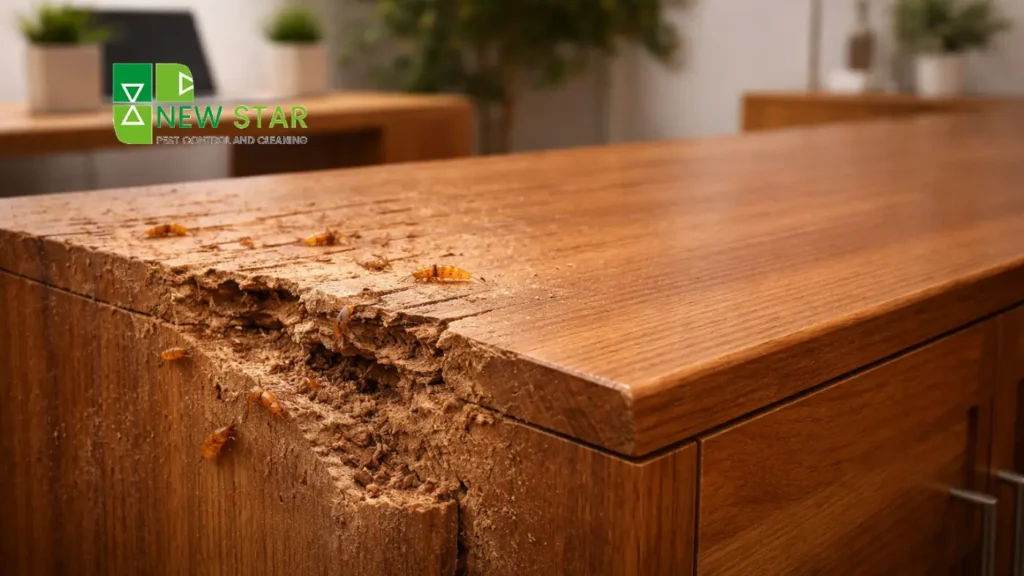
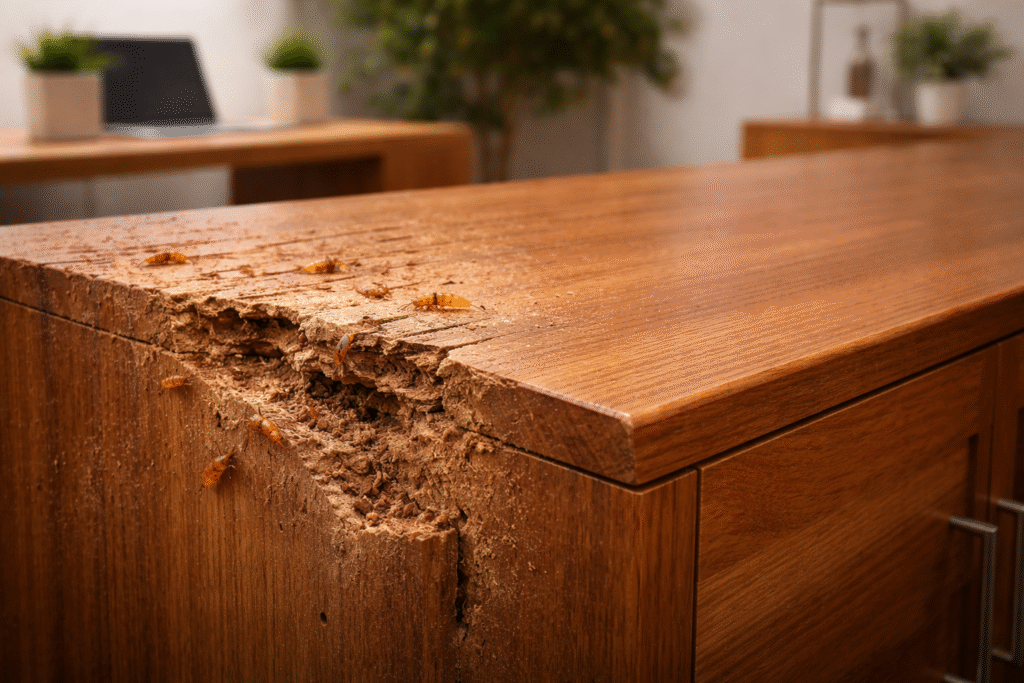
Have you ever noticed a small crack or hollow sound in your wooden furniture and wondered what caused it? What seems like minor wear could actually be the early signs of termite damage. For businesses, this silent threat can lead to costly repairs and unexpected losses. That is why understanding how to protect wooden furniture from termites is essential from the start.
Why Termite Protection Is Critical for Businesses
Because termites can cause a lot of damage before being discovered, they are often referred to as “silent destroyers.” For business owners, these damages often result in out-of-pocket expenses and disrupt normal business activities, ultimately damaging client/customer perceptions
Damaged furnishings (e.g., hotel lobbies and office reception areas) will diminish the credibility of the business. Shelving in retail stores that are structurally weakened by termite activity can lead to unsafe conditions. By preventing termite damage, you will create savings over time as well as maintain a consistent brand image.
Understanding Termite Behavior
Having a solid understanding of the way the termite functions is very important when implementing successful methods of preventing termite infestations. Termites eat cellulose found in wood and plant materials and tend to thrive in humid, warm places like underground or within walls as they build their colonies. Termites usually gain access to your furniture from a very small crack or by coming into direct contact with the soil. Once termites gain access to the inside of your furniture, they are able to consume wood from the inside out, which makes it difficult for you to identify any problem until it is too late. Because of this, it is vital to know how to protect wooden furniture from being infested by termites to manage them proactively.
Early Warning Signs of Termite Infestation
Identifying termites early can save businesses from costly repairs. Look for these common signs:
- Hollow or damaged wood surfaces
- Mud tubes along walls or furniture
- Discarded wings near windows or doors
- Small holes with powder-like residue
Routine inspections can help detect these signs before the problem escalates.
Preventive Measures to Protect Wooden Furniture
1. Utilize Termite-Proof Building Materials
Invest in furniture made from wood that has been treated or is naturally resistant. Engineered wood products and chemically treated wood tend to have better protection from termite infestations.
2. Ensure Adequate Airflow
Moisture is one of the main things that attracts termites to certain areas. Ensuring sufficient airflow through storage areas (where furniture is typically kept) and the areas where you operate will help mitigate this factor; repair leaking items, avoid standing water or puddles of water in and around your space, and keep your environment dry.
3. Apply Exterior Treatments
The application of various kinds of varnish, laminate, and protective coatings on the exterior of wooden furniture will create a barrier for termites. These types of finishing also improve aesthetics.
4. Maintain a Space Between the Floor and the Furniture
By keeping wooden furniture above the level of direct contact with soil, you can decrease the potential for termites to gain access to that piece of furniture.
Professional Protection Solutions
Businesses operating in high-risk environments should consider expert termite control in Dubai. Professional services provide deeper and more reliable protection compared to basic preventive measures. These solutions typically include detailed inspections, customized treatment plans, and long-term monitoring to safeguard wooden furniture and overall property.
While preventive care helps, consistent monitoring is essential to avoid recurring issues. Scheduling routine maintenance ensures early detection and timely action. Businesses that integrate termite pest control Dubai services into their maintenance plans can effectively reduce risks and avoid costly damage.
For complete and long-lasting protection, advanced solutions should always be part of your strategy. Modern anti-termite treatment Dubai focuses on treating not just visible infestations but also hidden colonies in soil, wood, and surrounding areas, creating a strong and durable defense system.
Daily Maintenance Practices for Businesses
Consistent maintenance is key to preventing termite damage. Here are some practical steps:
- Clean furniture regularly to spot early signs
- Avoid clutter in storage areas
- Inspect hidden corners and unused spaces
- Store wooden items in dry conditions
- Schedule periodic professional inspections
By integrating these practices into routine operations, businesses can significantly reduce risks.
The Role of Termite Prevention in Commercial Spaces
Hotels rely heavily on wooden interiors such as beds, cabinets, and decorative panels. Termite damage in such environments can lead to negative guest experiences and costly replacements.
Corporate offices use wooden desks, conference tables, and storage units daily. Maintaining their condition ensures a professional work environment and avoids unexpected disruptions.
Retail stores depend on wooden display units and shelves to showcase products. Protecting these assets ensures safety and enhances customer experience.
For businesses aiming to scale operations and maintain quality, understanding how to protect wooden furniture from termites becomes a critical part of facility management.
Integrated Pest Management Approach
A comprehensive strategy combines preventive measures, monitoring, and professional intervention. Businesses should partner with reliable pest control in Dubai providers to implement customized solutions based on their environment and risk level.
Integrated pest management focuses on long-term prevention rather than short-term fixes, making it a cost-effective approach for businesses.
FAQs
1. How often should businesses inspect wooden furniture for termites?
It is recommended to conduct inspections every six months, especially in humid regions.
2. Can termites spread from one piece of furniture to another?
Yes, termites can move through structures and infest multiple wooden items if not controlled early.
3. Are chemical treatments safe for commercial spaces?
Professional treatments are designed to be safe when applied correctly, with minimal disruption to operations.
4. Is preventive treatment necessary if no termites are visible?
Yes, prevention is always more cost-effective than dealing with an active infestation.
5. What is the most reliable solution for long-term protection?
Combining preventive care, moisture control, and professional services offers the best results.
Keep Your Furniture Safe and Strong
Protecting wooden furniture from termites is not just a maintenance task; it is a strategic investment in your business. From preserving aesthetics to ensuring safety and reducing long-term costs, the benefits are significant.
By implementing preventive measures, maintaining regular inspections, and using professional services, businesses can effectively safeguard their assets. Knowing how to protect wooden furniture from termites empowers business owners to stay proactive and avoid unnecessary losses.
Specialized Termite Control Services You Can Trust
If you want to secure your business space and protect valuable furniture, now is the time to act. Connect with trusted experts in anti-termite treatment and ensure long-term protection for your workplace and assets. At New Star Pest Control, we provide targeted termite treatments using safe and effective methods. Whether it’s early detection or severe infestation, our experts ensure complete protection for your home or business. Call 0588672492 to schedule your termite inspection today!