
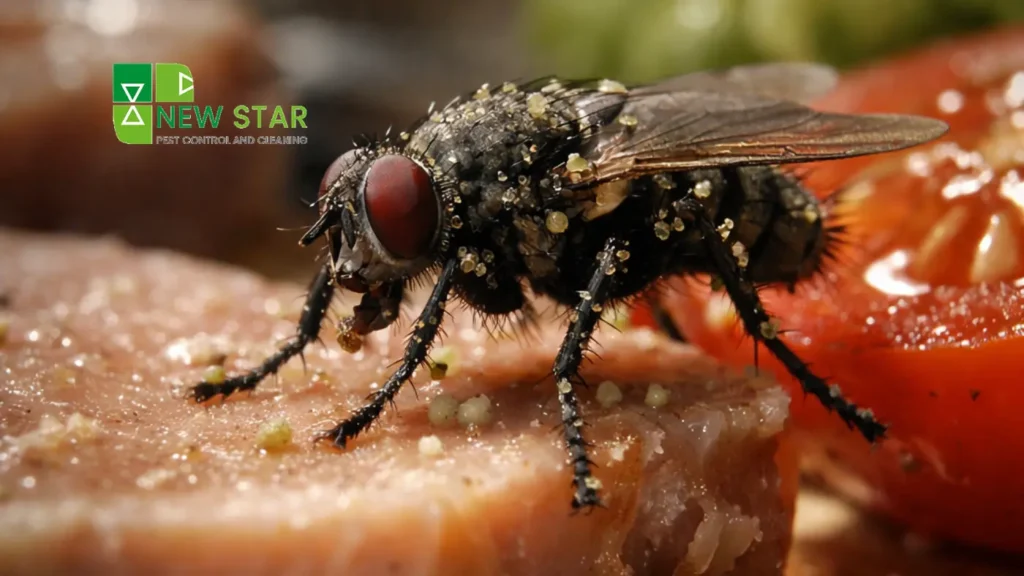
Houseflies are commonly seen in people’s kitchens, outdoors, and in public places all around the world. They fly around food, counters, and waste without warning. Houseflies not only annoy, but they also transmit very serious diseases by picking up and transferring disease-causing bacteria and viruses onto people.
How do house flies transmit disease? They do so by transferring bacteria and viruses from one contaminated place to a non-contaminated environment by direct physical contact with the infected surfaces, as well as through the digestion of infected food. This guide will explain the biology, methods of transmission, types of disease transmitted as a result of a housefly transmitting infection, and how you can prevent being infected with any of the above-mentioned diseases, using scientifically established facts to relate these things back to our daily lives.
House Fly Biology and Habitat Preferences
The common housefly (Musca domestica) prefers a warm, moist environment to reproduce successfully. The female house fly lays between 120 and 150 eggs at one time, with a total of approximately 500 eggs during her life cycle. All of her eggs will hatch and develop over a 7 to 10 day period if the temperature is between 25 and 40 degrees Celsius and if they are laid on rotting organic material (e.g., garbage, animal manure, compost heaps).
Houseflies search for food sources and breeding sites that are in proximity to human habitation, including garbage, human and animal feces, foods that are rotting, etc. Adult houseflies can travel over several kilometers each day from the breeding area to food sources using odors and light to guide them from one location to another.
The following characteristics of houseflies contribute to their ability to spread disease:
- They have hairy legs and sticky pads on their feet, which help them to trap particles.
- They have a spongy proboscis to suck up liquid food.
- They have a crop to store food and vomit it back up to share with others.
Why Houseflies Are Considered Dangerous
Houseflies are a significant health threat because they carry microorganisms like bacteria, viruses, and parasites. House flies do not bite like mosquitoes (also vectors) to transmit disease, but require contaminated surfaces (e.g., the ground or food) for diseases to be transmitted. House flies frequently land on garbage, feces, and sewage; when they return to food and kitchen surfaces, they bring with them the germs from the contaminated materials.
This is called mechanical transmission of pathogens by an insect; hence, one insect will carry pathogens from one location to another.
How Houseflies Pick Up Germs
The body structure of house flies also makes them a good transport medium for many types of microorganisms, including those that cause disease.
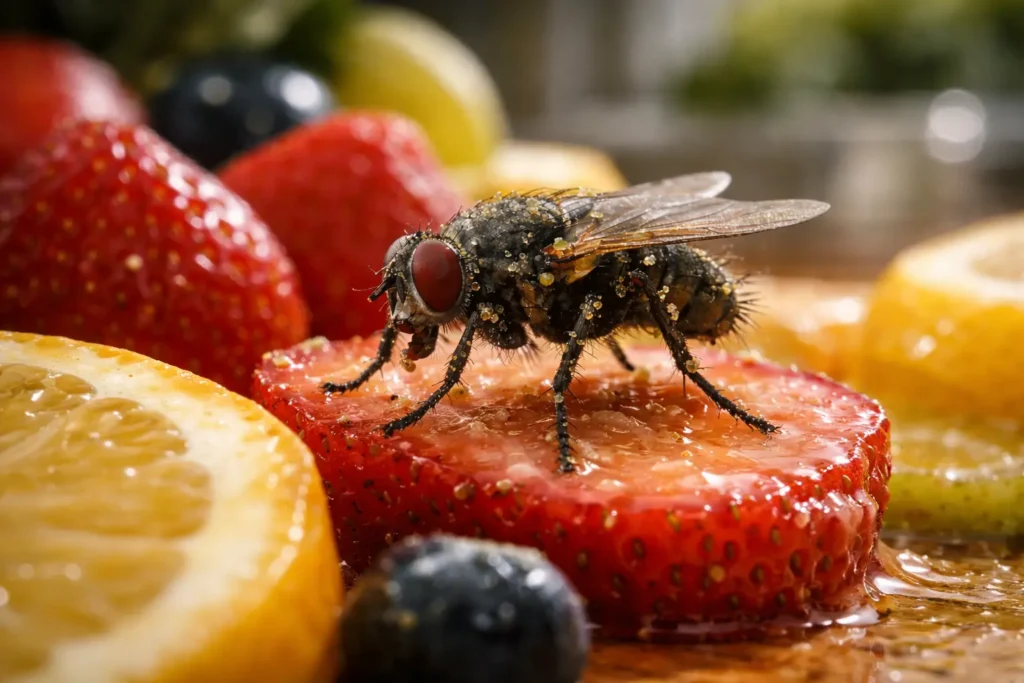
Tiny hair-like projections on a house fly’s body hold onto bacteria and other pathogens due to their tiny size and shape. Biofilms, in addition, help to keep germs attached to the fly’s legs (stickiness).
| Fly Body Part | Role in Spreading Germs |
| Hair body | Collects bacteria from waste. |
| Sticky feet | Transfer germs to food and surfaces. |
| Mouthparts | Picks up pathogens while feeding. |
| Digestive system | Stores bacteria that can later be released. |
When flies move from dirty places to clean environments, these microorganisms are transferred to food, utensils, and surfaces.
The Precise Mechanisms: How Do House Flies Spread Diseases
Mechanical vectoring is how houseflies can spread diseases: by means of transport rather than biological multiplication in the fly.
- picking up pathogens: When flies land on feces, dead animals, and/or infected materials, they will pick up the bacteria (Salmonella, E. coli, etc.) and viruses, protozoa, and helminth eggs. The proboscis will ingest any fluid that is contaminated.
- Digestion and excretion: In order to obtain solids, flies will vomit (regurgitate) the contents of their crop (enzymes + gut microbes) onto a surface, and then they will defecate numerous (the count is all over the place) droplets of material containing fecal pathogens.
- contamination to humans: Wherever a contaminated body part comes in contact with food, water, or skin, it will become contaminated. Laboratory researchers indicate that each fly can deposit as many as 10^6-10^7 viable bacteria with each landing, and they continue to survive for several hours after that.
The major route of transmission for fecal-oral diseases is through this vector. The World Health Organization has identified houseflies as an important vector for over 65 diseases worldwide.
Ways House Flies Spread Diseases
House flies spread diseases through several actions that occur during feeding and movement.
1. Contaminating Food
Flies often land on uncovered food. When they do, bacteria from their legs and bodies are transferred onto the food. If the contaminated food is eaten, it may cause infections or food poisoning.
2. Regurgitation
House flies cannot chew solid food. Instead, they release digestive fluids onto food to dissolve it before consuming it. During this process, they may regurgitate partially digested material from their stomach, which may contain harmful pathogens.
3. Defecation
Flies defecate frequently while feeding. Their droppings may contain disease-causing bacteria that contaminate food and surfaces.
4. Surface Contamination
Even if flies do not land directly on food, they can contaminate kitchen counters, utensils, and dining tables. These contaminated surfaces can later transfer germs to humans.
Major Diseases Transmitted by House Flies
Diseases spread by houseflies primarily affect the gut, eyes, and skin:
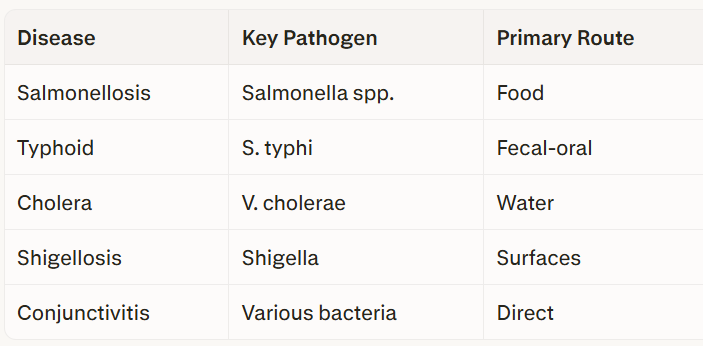
- Gastroenteritis (Salmonella, E. coli): Abdominal pain, diarrhea, and fever (12-72 hours incubation).
- Typhoid Fever: Sustained high fever from Salmonella typhi (7-14 days).
- Cholera: Acute watery diarrhea (Vibrio cholerae, hours to days).
- Shigellosis (Dysentery): Blood/mucus in stools (1-3 days).
- Bacterial conjunctivitis: Eye inflammation from contact.
- Food Intoxication: Staphylococcus toxins cause rapid nausea.
Who Is Most Vulnerable and What Are the Contributing Factors
At an increased risk for hygiene-related problems are children under the age of five, elderly persons, and persons with immunocompromised status. Poor sanitation increases exposure to open defecation and inadequate waste disposal. Environmental conditions such as heat and moisture lead to exponential increases in the population of flies. Within one breeding site, thousands of flies can be produced weekly.
Proven Prevention and Control Measures
Disrupt the cycle with these evidence-based steps:
- Source Reduction: Prompt waste removal; cover compost.
- Food Safeguards: Use screens and lids; store perishables properly.
- Physical Barriers: Fine mesh on windows/doors.
- Sanitation: Disinfect surfaces and handwashing.
- Chemical Controls: Approved insecticides or baits sparingly.
- Biological Aids: Fly traps and parasitic wasps in large areas.

Consistent application slashes fly numbers by 85%, per field studies.
When combining all of these methods for fly control, it can reduce the number of flies in homes and businesses by up to 85%, according to studies conducted around the world.
House flies also transmit a wide variety of diseases through the following ways:
1. Contaminating Food
When house flies land on uncovered food, they transfer bacteria from their legs and bodies onto the food. If eaten, that food could cause a person to become infected or suffer from food poisoning.
2. Regurgitation
House flies cannot easily cut or chew solid food, so they regurgitate their stomach contents onto solid food, which oozes with their digestive juices. During this process of dissolving food in their mouths, they may regurgitate partially digested materials remaining in their digestive tracts, which could contain harmful bacteria.
3. Defecation
While feeding, house flies tend to defecate frequently. Their droppings may contain bacteria that cause diseases and may contaminate food or surfaces where house flies have defecated.
4. Surface Contamination
House flies do not have to land directly on food. Even if a fly lands on a kitchen counter, a utensil, or a table where food is served or prepared, that fly is still capable of contaminating any of those surfaces. Even if you wash that surface/utensil/table before using it or eating, there may not be enough bacteria removed to cause an illness to you or any members of your family.
Why House Flies Multiply Quickly
One of the reasons house flies are difficult to control is their rapid reproduction cycle. In favorable conditions, flies can develop from eggs to adult insects in just a short time. Because of this fast life cycle, a small fly problem can quickly turn into a large infestation if breeding areas are not eliminated.
How to Prevent House Fly Infestations
Preventing house flies requires maintaining cleanliness and eliminating conditions that attract them.
Maintain Proper Sanitation
Dispose of garbage regularly and keep waste bins tightly sealed. This reduces the availability of food sources for flies.
Keep Food Covered
Food should always be stored in covered containers to prevent flies from landing on it.
Clean Kitchen Surfaces
Regularly clean kitchen counters, tables, and cooking areas to remove food particles that attract flies.
Install window screens.
Mesh screens on doors and windows help prevent flies from entering homes and buildings.
Eliminate Breeding Areas
Flies breed in moist organic matter such as garbage, manure, and rotting food. Removing these materials helps prevent infestations.
The Role of Professional Pest Control
In some situations, house fly infestations can become difficult to manage. In such cases, professional pest control services can provide effective solutions.
Pest control experts use specialized methods to identify breeding sites, reduce fly populations, and implement preventive measures. These treatments help maintain hygienic conditions in homes, restaurants, and food processing facilities. Regular pest control services are especially important in places where hygiene and food safety are critical.
Conclusion
Houseflies may seem harmless; however, they are capable of transmitting numerous dangerous diseases to people by traveling from a filthy location to a food source, thereby transferring bacteria or other disease-causing microorganisms (pathogens) that pose serious health risks. Keeping things clean, keeping your food covered, and removing possible breeding sites are important steps in preventing housefly infestations. If flies become very difficult to control, utilizing a pest control service is a great option for long-term solutions.
Knowing how houseflies can spread disease provides information on what precautions need to be taken to protect your home, business, and/or community from health hazards caused by houseflies. Through proper hygiene and pest control methods, it will be possible to create a safer and healthier living space.
Are you looking for reliable pest control in Dubai? New Star provides professional, safe, and effective control solutions designed to eliminate infestations. Call 0588672492 now to protect your home, your business, and your health.